
Umrah is often referred to as the lesser pilgrimage. It differs from Hajj in that it can be performed at any time of the year and is completed in a shorter period. Yet, it carries huge spiritual rewards.
The Prophet Muhammad ﷺ said:
“From one Umrah to the next is an expiation of sins committed between them.”
Sahih al-Bukhari 1773
That alone demonstrates its significance. Performing Umrah for the first time feels both exciting and overwhelming. You’re about to enter a journey that millions dream of. This guide is written to clarify everything.
You can think of Umrah as a simple four-part act of worship:
| Step | Name | Meaning |
| 1 | Ihram | Entering a sacred state and declaring intention |
| 2 | Tawaf | Walking seven times around the Kaaba |
| 3 | Sa’i | Walking seven times between the hills of Safa and Marwah |
| 4 | Halq / Taqsir | Shaving or trimming hair to complete Umrah |
Each part connects you back to faith and the story of Islam’s earliest believers. Let’s walk through them one by one.
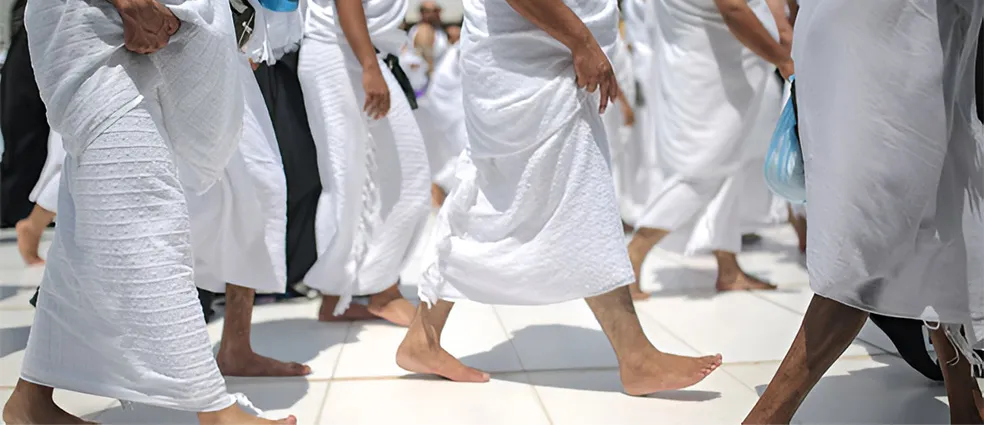
Before you reach Makkah, you’ll enter Ihram, which is both a dress code and a state of purity. Once you’re in Ihram, you focus entirely on worship, and no focus should be on arguments, no perfume, no cutting hair or nails.
Miqat is the boundary you must cross in Ihram. Pilgrims flying in usually wear Ihram at home or at the airport before take-off. Airlines typically announce when you’re near Miqat so you can make intention (niyyah) on time.
Once ready, say your niyyah (intention):
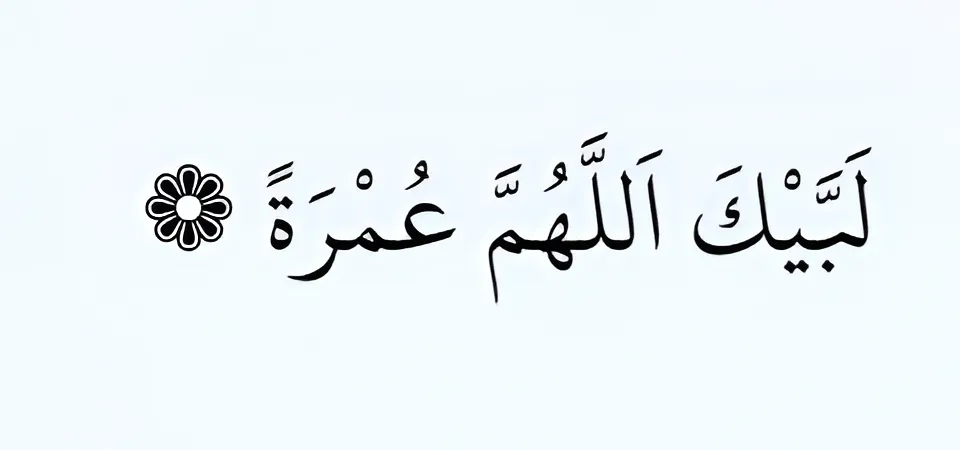
Labbayka Allahumma Umrah “O Allah, I am here to perform Umrah.”
Then begin reciting the Talbiyah frequently:
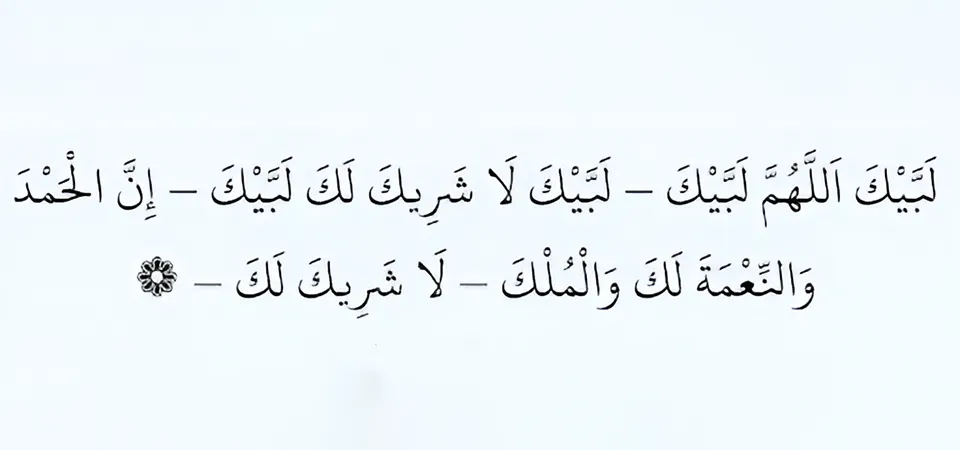
Labbayk Allahumma labbayk, labbayka la sharīka laka labbayk, inna l-ḥamda wa n-ni‘mata laka wa l-mulk, la sharīka lak.
Translation:
Here I am, O Allah, here I am. You have no partner. All praise, blessings, and dominion belong to You.
From that point, you are officially a Muhrim.
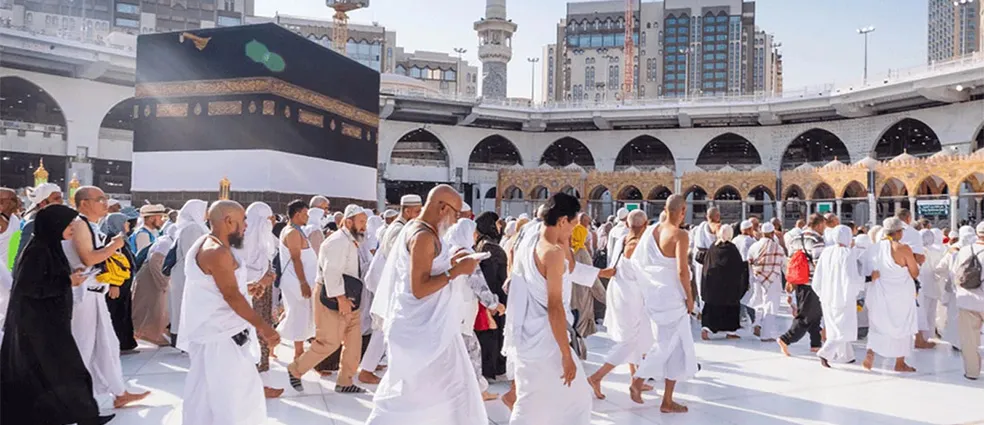
When you arrive in Makkah, you’ll enter Masjid al-Haram, which is the Grand Mosque that holds the Kaaba. The first sight of it is unforgettable. Take a few seconds, breathe, and thank Allah silently before starting.
Make sure you have wudhu. Men uncover the right shoulder (this is called Idtiba).
Face the Black Stone (Hajr al-Aswad), raise both hands, and say:
“Bismillah, Allahu Akbar.”
If you can’t reach it, just raise your hand toward it.
You’ll walk around the Kaaba anti-clockwise seven times. Each lap starts and ends at the Black Stone. Keep the Kaaba on your left side and move calmly. Men walk briskly during the first three rounds if space allows (called Ramal).
Say any du’a you like. You don’t need a printed guidebook; talk to Allah in your own words.
Between the Yemeni Corner and the Black Stone, say the du’a from Surah al-Baqarah (2:201):
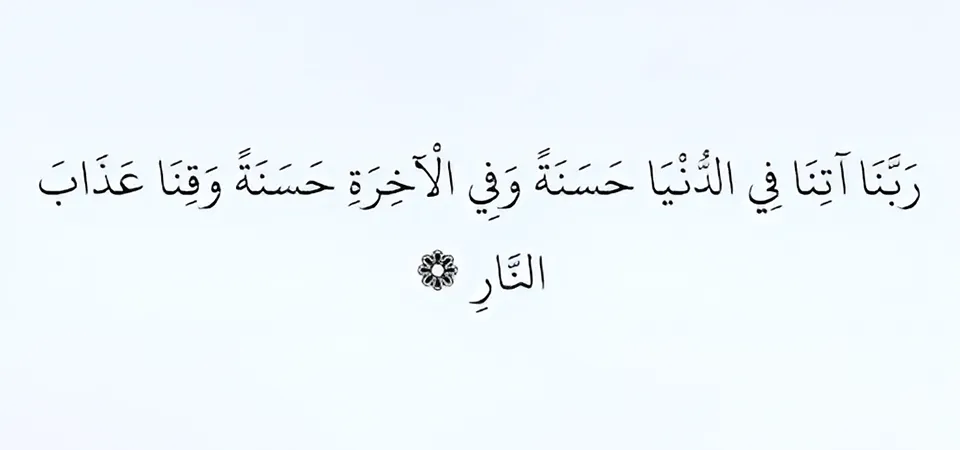
Rabbana atina fid-dunya hasanatan wa fil-akhirati hasanatan wa qina ‘adhaban-nar.
Our Lord, grant us good in this world and in the Hereafter, and save us from the fire.
Repeat this every circuit until the seventh.
In order to offer private prayers, many pilgrims also pause momentarily at the Multazam, which is the area between the Black Stone and the Kaaba's door.
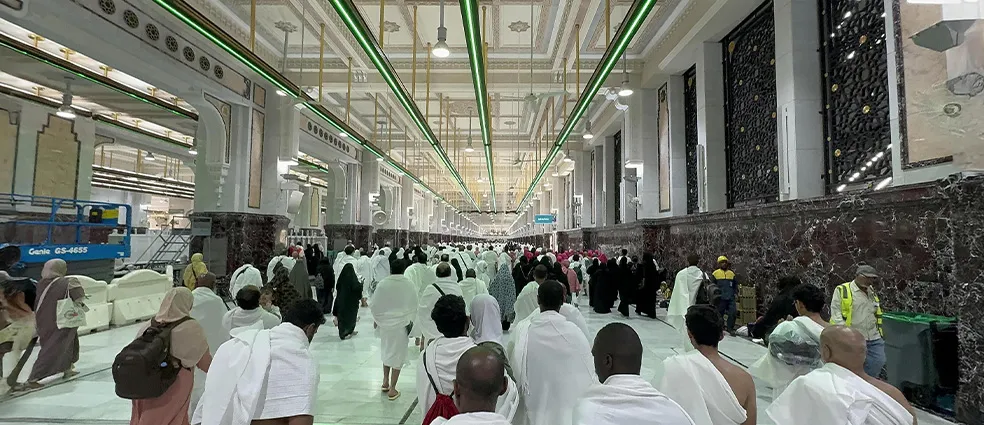
The next step is Sa'i, which involves pacing back and forth between Safa and Marwah, two small hills located within the Masjid al-Haram. This deed honours Prophet Ibrahim's wife Hajar and her quest for water for her infant son Ismail.
When you reach Safa, face the Kaaba and raise your hands and say “Allahu Akbar” three times.
Then recite:
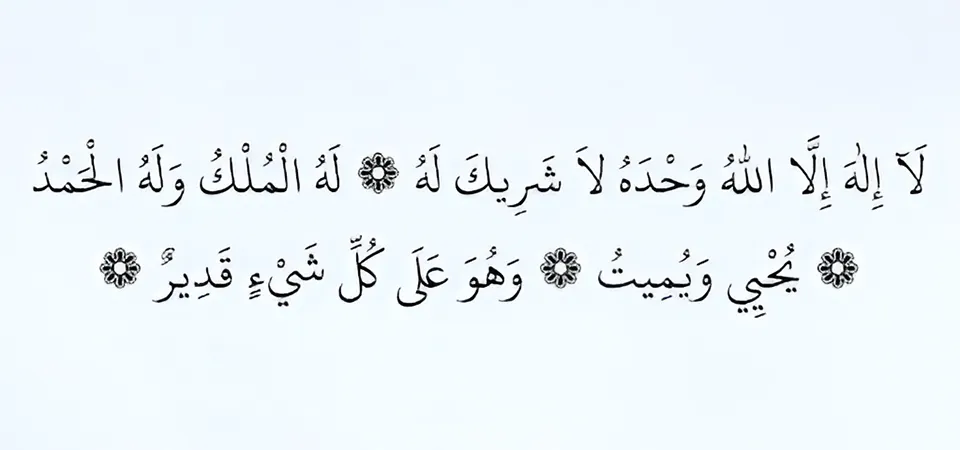
La ilaha illallahu wahdahu la sharika lah, lahul mulku wa lahul hamdu, yuhyi wa yumit, wa huwa ‘ala kulli shay’in qadir.
Make du’a for whatever your heart wants.
Walk from Safa to Marwah (about 450 meters). When you see the green lights, men jog lightly between them, and women continue walking. At Marwah, repeat the same dhikr and du’a.
That’s one lap. Returning to Safa counts as two, and so on until you’ve completed seven laps, finishing at Marwah. Take your time. Say Qur’an verses, pray quietly, or just reflect.
You can sit, rest, and pray two short rak‘ahs to thank Allah for giving you the strength to finish.
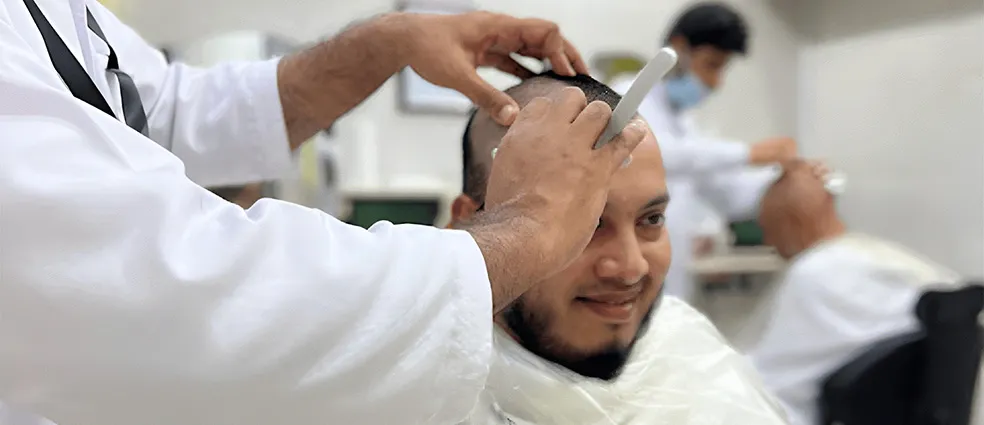
This is the final step, and it completes your Umrah.
After that, you’re free from the rules of Ihram. You can wear normal clothes again and feel the calm joy that comes after worship. Take a quiet moment for gratitude as you’ve just finished your first Umrah.
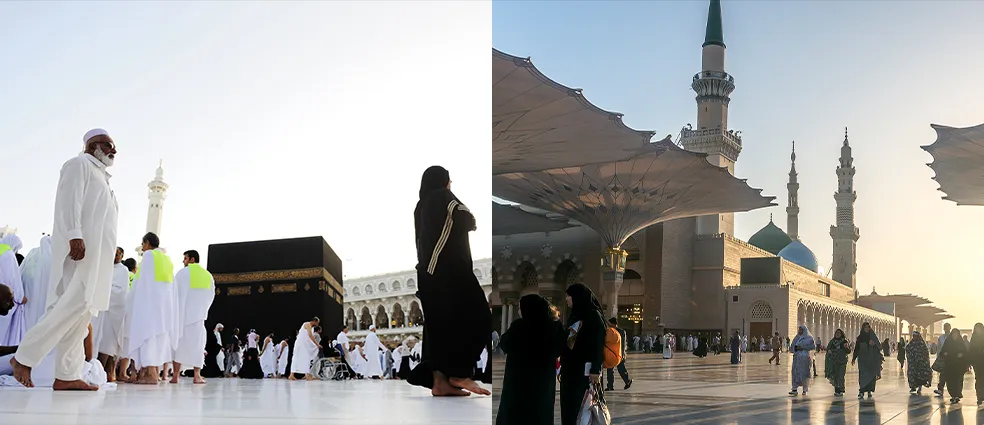
Once the rituals are done, use the chance to explore both cities and connect with their history.
These places remind you of how Islam began, and they bring history to life.

Before you finalise your tickets, double-check your visa and vaccination requirements.
| Requirements | Details |
| Visa Type | You can apply for a Umrah Visa through a licensed agent or a Saudi Tourist Visa if your country is eligible. |
| Passport Validity | Must be valid for at least six months. |
| Vaccines Required | Meningitis (ACWY) vaccine is mandatory. |
| Optional Vaccines | Polio or Yellow Fever vaccines may be required for travellers from specific regions. |
| Proof to Carry | Print or keep digital copies of your vaccination card, visa approval, and ID. |
Pro tip: Save soft copies of your visa and health documents on your phone, and also email them to yourself in case you misplace the physical ones.
You’ll be walking a lot, especially during Tawaf and Sa’i. Even if you’re young and fit, the physical demand can surprise you. Here’s how to stay comfortable and avoid burnout:
Think of it as a combination of spiritual training and physical discipline.
Reliable internet in Saudi Arabia is crucial. You’ll use it for navigation, du’a guides, and staying in touch. Here are the main options you’ll find once you land:
The eSIM option is often the easiest for travellers who don’t want the hassle of visiting local stores. Just activate it before departure, and you’ll have data the moment you land.
It’s easy to get caught up in logistics, such as crowds, hotel check-ins, and schedules, but remember why you came. Here’s how to stay centred:
You can also perform extra voluntary Umrahs if you have time.
Your first Umrah changes how you see everything. You feel peace that words can’t explain. Don’t rush it. Take your time to absorb it all. When you return home, let that peace follow you.
Yes, but only before you officially enter the state of Ihram. Once you have made your intention and started reciting the Talbiyah, you must avoid using any scented products.
Yes, and it’s actually useful. Many pilgrims use mobile Qur’an apps or du’a guides while walking. Just keep it on silent, avoid taking selfies during worship, and carry a power bank.
Yes. Wheelchairs are available inside Masjid al-Haram and Masjid an-Nabawi, with staff to assist. There are even electric wheelchairs that can be rented per hour. If you’re with elderly parents, it’s best to pre-book or bring a foldable one.
Yes, women from many countries can perform Umrah without a mahram, especially on a valid tourist or group visa. Rules vary depending on your nationality and visa type, so please check with your local Saudi Embassy or travel agent before booking.
 SVG.svg)
Makkah Travel is here to help you visit religious places.

 Arrow SVG.svg)
 SVG.svg)