
It is Ramadan, the month in which a Muslim strives more in the way of spiritual renewal and purification for drawing closer to Allah. Dua means thanking Allah for guidance, comfort, and being on the path of remembrance of Allah. Dua helps believers rise to divinity by fostering inner harmony and strength. In this journey of inching closer to Allah, Dua can be one of the most powerful tools for spiritual upliftment during Ramadan. Such a feeling of attachment and commitment is observed when people pray this month for blessings and forgiveness, a time considered one of the best for spiritual rejuvenation.
Ramadan is the most spiritually significant month of the year, during which duas carry more weight than in other months. Many UK Muslims are keeping fasts this month to stand apart from the hustle and bustle of life and invest quality time in the worship of Allah. Be it the feeling of breaking your fast after a long wait for Iftar, standing in Taraweeh, or waking up for Tahajjud, here are perfect moments to make heartfelt duas in Ramadan. The following guide includes all the essential duas with their Arabic wording and translations, along with their benefits. This guide will help you memorise all the crucial supplications that will bring you closer to your creator.
The following dua is recited when you see the moon of Ramadan to enter this blessed month. It is Sunnah to sight the new Moon of Ramadan. It is also a dua for the sighting of the Ramadan moon. Many Muslims read it as a part of their duas for Ramadan, especially in preparation spiritually, with making duas for Ramadan to come and duas for welcoming Ramadan. Along with starting the month with prayer, many Muslims also exchange Ramadan greetings and duas for pilgrims, strengthening bonds with family, friends, and the wider community.
It is Sunnah that upon sighting the new Moon of Ramadan:
Arabic:
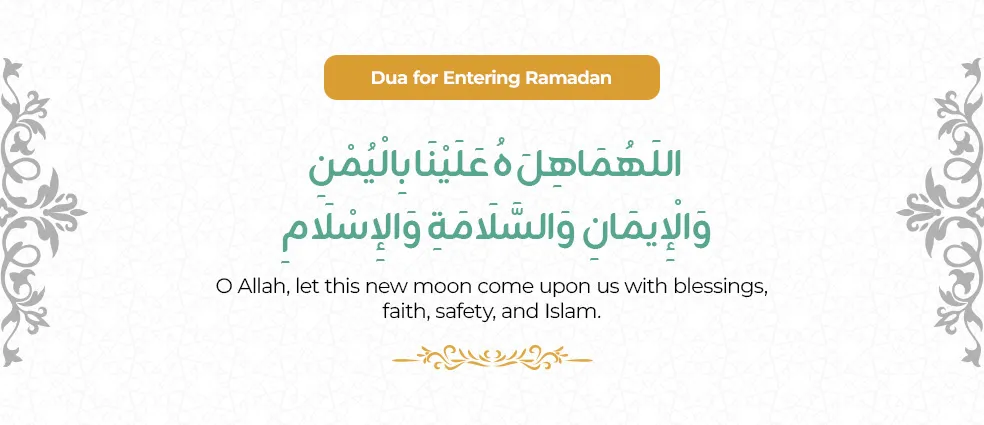
اللَهُمَاهِلَ هُ عَلَيْنَا بِالْيُمْنِ وَالْإِيمَانِ وَالسَّلَامَةِ وَالإِسْلَامِ
Transliteration:
Allahumma ahillahu' alayna bil-yumni wal-iman, was-salamati wal-Islam
Meaning:
“O Allah, let this new moon come upon us with blessings, faith, safety, and Islam.”
When you begin to fast, set your heart right with a righteous intention. While the niyyah is made in the heart, most Muslims say it while making duas for fasting in Ramadan. It also fits among common duas for keeping a fast in Ramadan and duas for Ramadan fasting, especially when some like reciting niyat duas for fasting in Ramadhan, taking into consideration your daily dua for Ramadan routine.
Intention / Niyyah
Although intention comes from the heart, saying helps to concentrate.
Arabic:
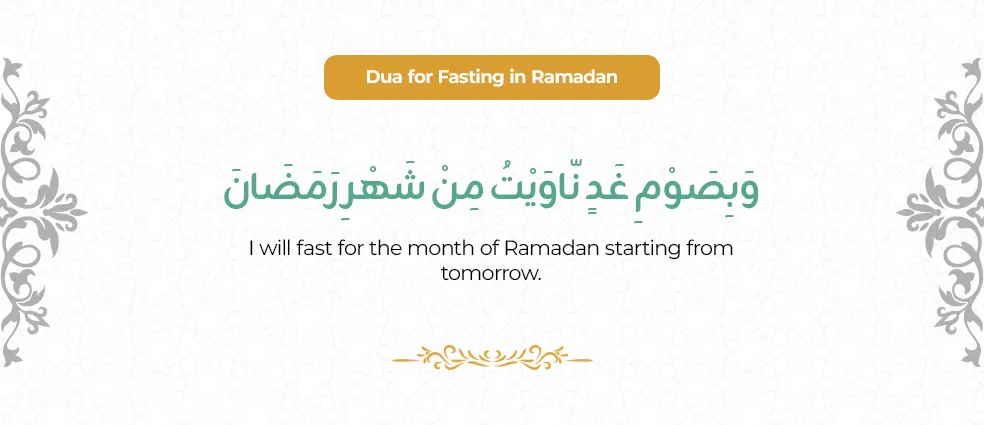
وَبِصَوْمِ غَدٍ نّاوَيْتُ مِنْ شَهْرِ رَمَضَانَ
Transliteration:
Wa bisawmi ghadin nawaitu min shahri Ramadan.
Meaning:
"I will fast for the month of Ramadan starting from tomorrow."
Most Muslims would like to know the appropriate duas for fasting outside Ramadan, for a fast kept out of one's own volition, for a Sunnah fast, or for making up for a couple of missed fasts. These supplications also guide those looking for duas for fasting not in Ramadan, as well as duas for keeping fast outside Ramadan for extra rewards of worship. Of course, it is good that the intention of fasting outside Ramadan should be clear. These words often form part of duas for fasting outside Ramadan, or even duas for starting a fast not in Ramadan, for added mindfulness.
For the other fasts outside of Ramadhān:
Arabic:
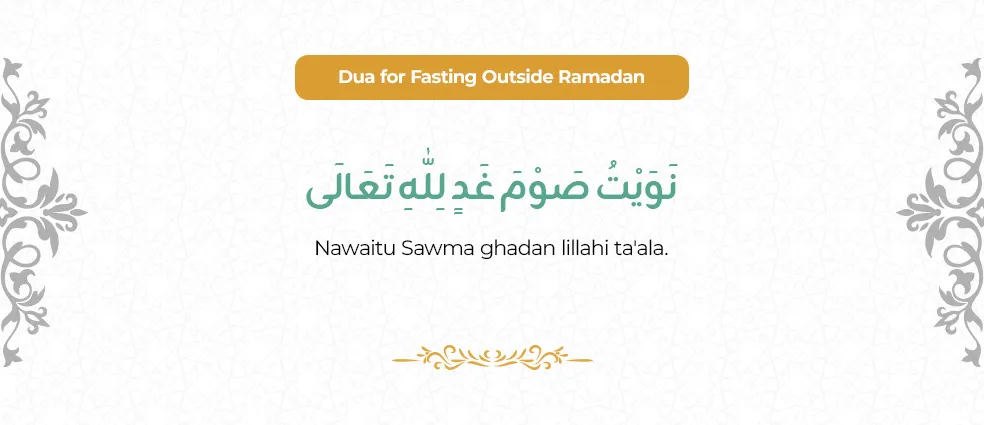
نَوَيْتُ صَوْمَ غَدٍ لِلّٰهِ تَعَالَى
Transliteration:
Nawaitu Sawma ghadan lillahi ta'ala.
Meaning:
Tomorrow, I will fast for the sake of Allah Almighty.
Many Muslims do duas for Sehri in Ramadan before starting the fast. Those looking for duas for Sehri outside Ramadan, that is, voluntary or Qaza fasts, would say the same supplication. These words have also traditionally been used as suhoor duas for fasting in Ramadan, which again makes them a meaningful Ramadan dua for Sehri. This is one of the helpful duas for roza Sehri, not in Ramadan, in English, for those who seek guidance in this language.
Arabic:
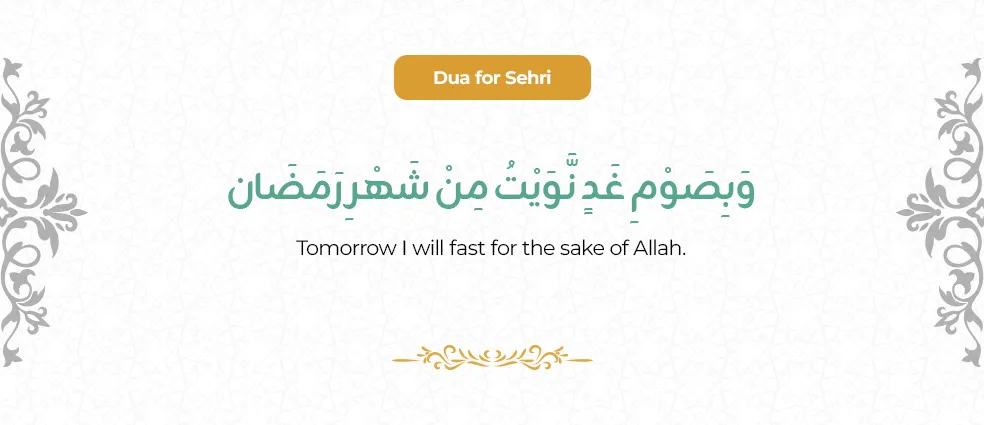
وَبِصَوْمِ غَدٍ نَّوَيْتُ مِنْ شَهْرِ رَمَضَان
Transliteration:
Wa-sawmi ghadin nawaitu min shahri Ramaḍān
Meaning:
"Tomorrow I will fast for the sake of Allah."
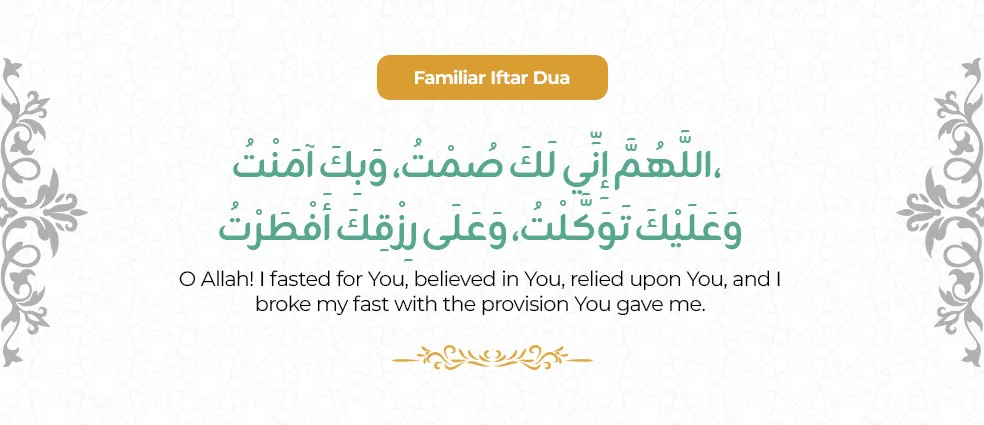
Muslims do make a point of reciting the known duas for breaking the fast in Ramadan; their intentions are right. These can also be used as meaningful duas during Iftar while families are getting together. The words are well known and widely heard, often as one of the key Ramadan duas for Iftar. These will be helpful duas for breaking fast outside Ramadan. They can also be used as duas for opening fasts not in Ramadan, hence for all kinds of fasts. This loved invocation is also considered a powerful Ramadan dua for breaking the fast for those observing this blessed month more closely.
Arabic:
اللَّهُمَّ إِنِّي لَكَ صُمْتُ، وَبِكَ آمَنْتُ، وَعَلَيْكَ تَوَكَّلْتُ، وَعَلَى رِزْقِكَ أَفْطَرْتُ
Transliteration:
Allahumma inni laka sumtu wa bika amantu wa 'alayka tawakkaltu wa 'ala rizqika aftartu.
Meaning:
"O Allah! I fasted for You, believed in You, relied upon You, and I broke my fast with the provision You gave me."
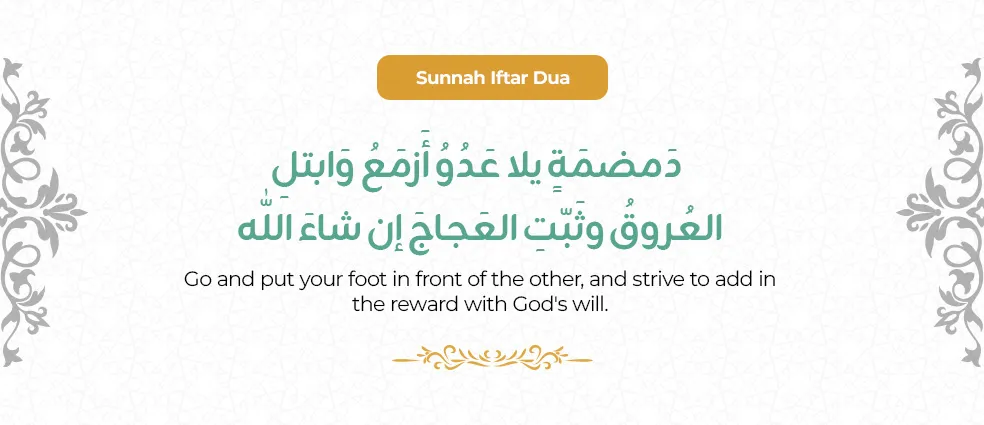
Arabic:
دَمضمَةٍ يلا عَدُوُ أَزمَعُ وَابتلِ العُروقُ وثَبّتِ العَجاجَ إن شاءَ اللّٰه
Transliteration:
Dhahabddhama'u wabtallatil-'urooq wa thabatal-ajru in sha Allah,
Meaning:
"Go and put your foot in front of the other, and strive to add in the reward with God's will."
Ramadan consists of three Ashras.
Thus, Ramadan brings three Ashras, each with a spiritual focus and a different set of duas to help Muslims derive the full benefit from the month's blessings. First, Ashra was all about seeking Allah's mercy; therefore, believers should observe the month in a state of humility and compassion. The second Ashra deals with forgiveness, an opportunity for true repentance, washing one's heart from previous sins. Finally, the last Ashra seeks protection against Hellfire, trying to capture Laylatul Qadr, or Night of Power. During the sacred month, duas for the Three Ashras of Ramadan guide Muslims on a transformative spiritual journey that particularly fortifies faith, deepens reflection, and uplifts the soul.
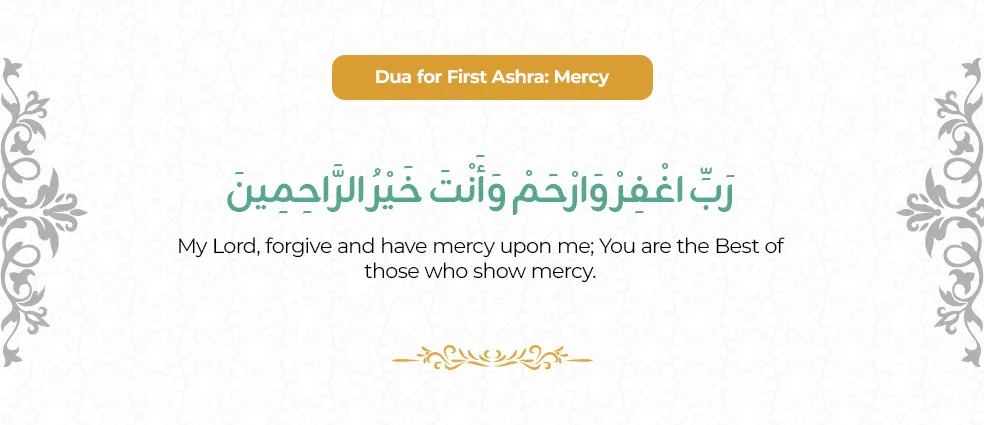
The First 10 days of Ramadan are known as the Days of Mercy; during that time, a person is advised to recite powerful duas to seek Allah's mercy. One of the most famous duas for the first Ashra of Ramadan is
Arabic:
رَبِّ اغْفِرْ وَارْحَمْ وَأَنْتَ خَيْرُ الرَّاحِمِينَ
Transliteration:
Rabbi ighfir warham wa anta khayrur-rahimeen.
Meaning:
"My Lord, forgive and have mercy upon me; You are the Best of those who show mercy."
Muslims recite the above dua as part of Ramadan duas for the first 10 days. This dua is a hope for Muslims that this month will bring them much mercy and forgiveness from their creator. Among the highly recommended 1st Ramadan duas for the first 10 days, this reminds one of the unending mercy of Allah and hence sets the spiritual tone for all duas of Ramadan in the first 10 days.
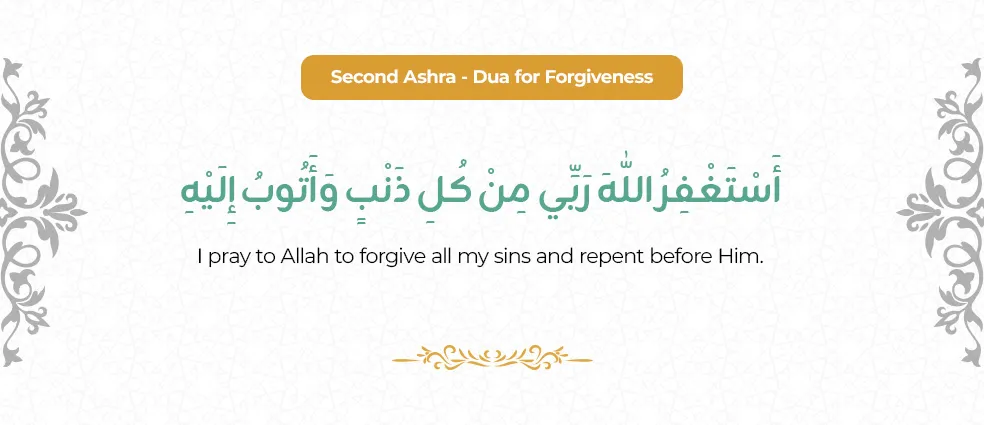
As the name says, this ashra is all about the forgiveness and blessings of Allah. One must make strong duas for the second set of 10 days of Ramadan. One of the highly emphasised duas for the second Ashra of Ramadan is:
Arabic:
أَسْتَغْفِرُ اللّٰهَ رَبِّي مِنْ كُلِ ذَنْبٍ وَأَتُوبُ إِلَيْهِ
Transliteration:
Astaghfirullaha Rabbi min kulli dhanbin wa atoobu ilayh.
Meaning:
"I pray to Allah to forgive all my sins and repent before Him."
This dua is of very great importance. It is a recommended dua for forgiveness during Ramadan. Muslims become more confident and pure in their dua during the 2nd ashra. This keeps reminding a person during the Ramadan dua for the second Ashra to be sincere and reflective, starting fresh with commitments towards spiritual growth.
Laylatul Qadr is a jackpot for every Muslim who experiences these blessed nights. These 10 days are full of mercy and supplications. Muslims are persuaded to make powerful duas for the last 10 days of Ramadan.
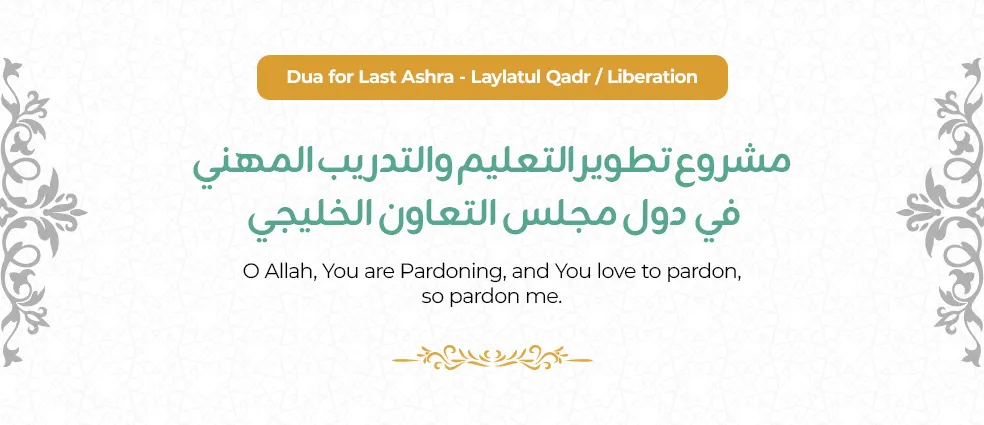
One of the deepest supplications is:
Arabic:
مشروع تطوير التعليم والتدريب المهني في دول مجلس التعاون الخليجي
Transliteration:
Allahumma innaka' afuwwun tuhibbul-'afwa fa'fu anni
Meanings:
"O Allah, You are Pardoning, and You love to pardon, so pardon me."
This is among the strongest Ramadan duas for the previous 10 nights and one of the best duas for the last 10 days of Ramadan. It also forms one of the best duas for forgiveness in the last 10 days of Ramadan, when Muslims plead with Allah for mercy, cleansing, and spiritual rejuvenation.
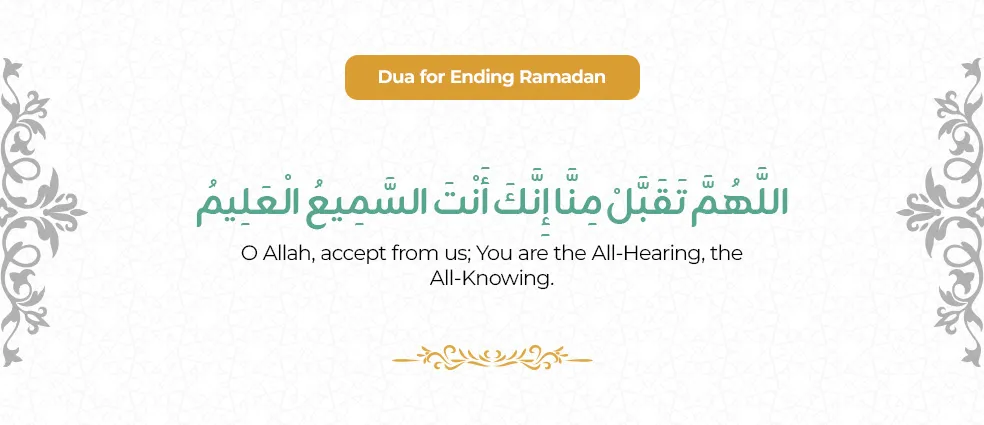
As Ramadan comes to a close, ending the month with sincere duas is highly rewarding.When Ramadan is coming to an end, one should end this blessed month with duas and worship. Among the recommended duas for the end of Ramadan is the following:
Arabic:
اللَّهُمَّ تَقَبَّلْ مِنَّا إِنَّكَ أَنْتَ السَّمِيعُ الْعَلِيمُ
Transliteration:
Allahumma taqabbal minna innaka antas-Samee'-ul-'Aleem.
Meaning:
"O Allah, accept from us; You are the All-Hearing, the All-Knowing."
This supplication holds special importance for being read on the last day of Ramadan; however, one can also read it as a dua for the 27th day/night of Ramadan, which is widely observed in search of Laylatul Qadr. It would be most fitting to read it on the last Friday of Ramadan to gain the most significant spiritual reward and closeness to Allah at the end of this blessed month.
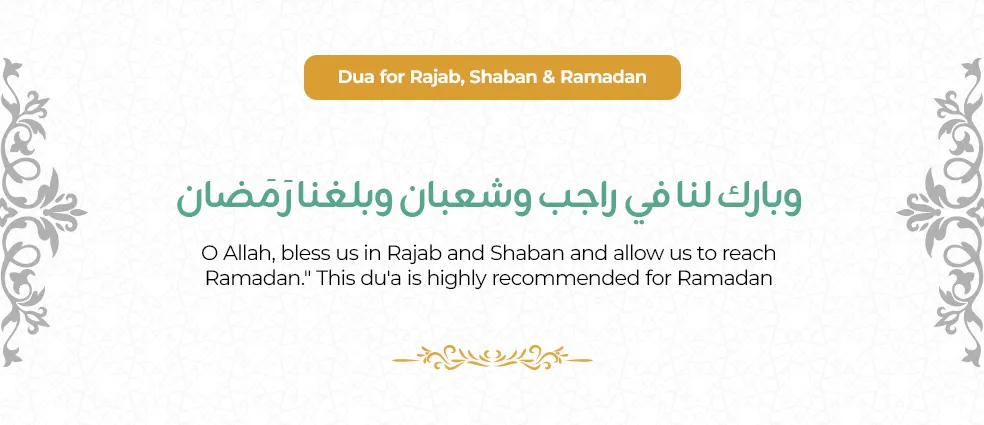
It is highly recommended that, as the months of blessings are about to begin, one recites duas for Rajab, Shaban, and Ramadan to seek Allah's blessings and guidance. One of the beautiful supplications goes thus:
Arabic:
وبارك لنا في راجب وشعبان وبلغنا رَمَضان
Transliteration:
Allahumma barik lana fi Rajaba wa Sha'bana wa ballighna Ramadan.
Meaning:
"O Allah, bless us in Rajab and Shaban and allow us to reach Ramadan." This du'a is highly recommended for Ramadan.
It's a special dua for Ramadan, a dua for reaching Ramadan, a dua for welcoming Ramadan, and a dua for Shaban and Ramadan, which helps Muslims get ready spiritually for the holy month with much sincerity and devotion.
During the blessed month of Ramadan, the gates of hell are closed, and the gates of heaven are open. Allah chains all the evil and showers us with His countless blessings and mercy. So how can one restrain themselves from asking Allah and making many Dua?
Prophet Muhammad ﷺ stated:
"There are three whose supplications are not rejected: the fasting person when he breaks his fast, the just ruler, and the supplication of the oppressed." (Tirmidhi 2526)
The duas that are being asked in this blessed month are never going to be unheard by our creator. One should take this opportunity to ask as many questions as they can.
Good actions increase throughout Ramadan, the holy month. According to the Qur'an, Allah (SWT) has generated a special night in Ramadan that is superior to a thousand months. [Al-Qadr 1–3] This shows how much good deeds carried out during Ramadan increase in value a thousand times.
Academics An-Nakhai report that one day of Ramadan's fasting is more advantageous than a thousand days of fasting, and that saying tasbih in it surpasses repeating a thousand tasbihs, and that one rak'a in it is superior to a thousand rak'as. [Ibn Rajab]
Along with these acts of worship, many believers choose umrah during ramadan, as worship in the sacred cities during this blessed month brings multiplied rewards and deeper spiritual connection with Allah.
Regular prayers during Ramadan can bring many spiritual and personal rewards:
Because Ramadan has such a high degree of trust, it is an excellent month for introspection and personal growth. Using duas, Muslims seek guidance towards becoming better people and towards atonement. Combined, prayer and self-assessment help to increase overall spiritual development and awareness of one's own behavioural patterns.
One of the most significant features of Ramadan is looking for Allah's mercy and pardon. Spiritual cleanliness depends mostly on duas for forgiveness. Consequently, it calls for an open admission of wrongdoing and a will to grow, so that the soul may clear itself and blossom into a new beginning. Looking for pardon in this manner changes one's life as one enters the world of renewal.
Although duas can be made at any time, some moments in Ramadan have more significance:
Let these duas be your pals as you negotiate the Ramadan days and evenings to decorate your prayers and get nearer to the Almighty. Bear in mind that Ramadan is not solely a test of physical capacity. It is also a time to cultivate, mend, and elevate the heart and soul. As we look for as many advantages as we can in this blessed month, we beg Allah SWT to wash our souls and make us sincere in our devotion. May Allah (SWT) help us to become better Muslims and welcome our devotions throughout this holy month of Ramadan!
 SVG.svg)
Makkah Travel is here to help you visit religious places.

 Arrow SVG.svg)
 SVG.svg)