
For Umrah, men must remove their hair after completing the rituals, either by fully shaving the head or trimming it. This step is necessary to complete Umrah. Shaving is preferred, but trimming is also acceptable.
Women, however, do not shave their heads — they only cut a small portion of their hair.
Many people get confused about shaving the head during Umrah. Some think every person must fully shave their hair. A little trimming is enough for everyone. Then some first-time pilgrims become nervous because they do not want to do something wrong during such an important journey. It can feel stressful, especially when different people explain the rules differently. But the rules are actually very simple once explained.
This act is not only about hair. It also carries a deep spiritual meaning. It reminds Muslims of humility, obedience, and the importance of starting fresh after worshipping Allah in the holy city of Makkah. Many pilgrims even describe this moment as emotional because it feels like the closing of a beautiful chapter in their spiritual journey. That is why understanding the rules properly matters so much before going for Umrah.
For men, shaving the head after Umrah is not mandatory, but it is considered more rewarding than trimming the hair. Trimming is also valid and completes the Umrah.
For women, shaving the head is not allowed. They only need to cut a small portion of their hair to complete Umrah.
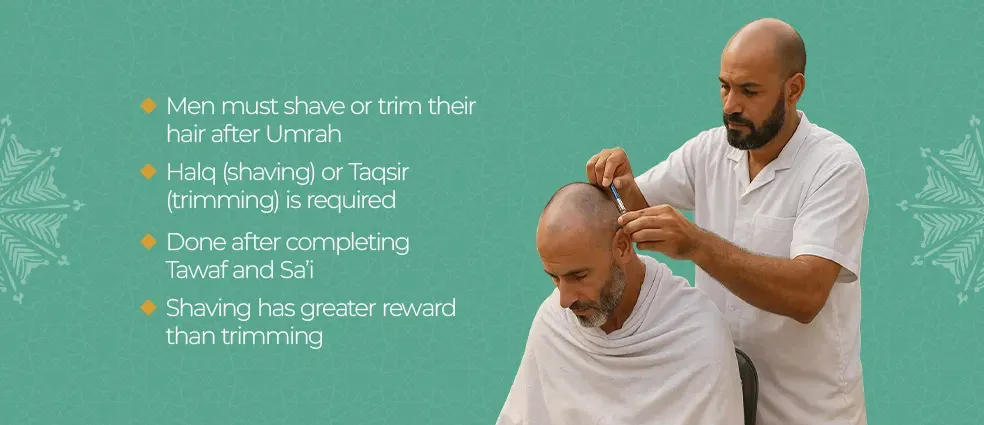
For men, removing hair after Umrah is necessary. This is not a small extra act that can be skipped casually. A man must either shave his head completely or trim his hair from all sides. This process takes place after Tawaf and Sa'i are completed.
A full head shave is called Halq. Many scholars explain that this is the better and more rewarding option for men. The Prophet Muhammad, PBUH, made a special dua for those who shaved their heads. This is why many pilgrims prefer it.
The trimming option is called Taqsir. In simple terms, it means shortening the hair evenly around the head. Once this is done, the man exits the state of Ihram and can resume normal activities, such as wearing stitched clothes or using perfume.
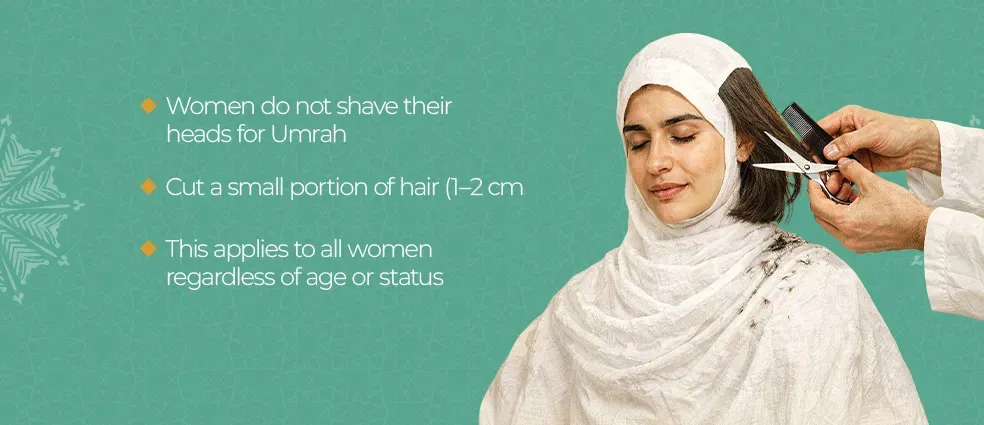
On the other hand, women follow a completely different rule. They are not allowed to shave their heads for Umrah. Instead, they only cut a very small amount from the ends of their hair. Usually, scholars explain this as around one or two centimeters. It is a simple, quick step, but it is still necessary to complete Umrah properly.
This ruling applies to all women regardless of age. Young girls, older women, married women, and unmarried women all follow the same basic instructions. The goal is not dramatic hair removal. Instead, it is simply a symbolic act that marks the completion of worship.
Many pilgrims hear the words Halq and Taqsir before Umrah and immediately get confused. The terms sound technical and unfamiliar at first. But the meanings are actually very easy to understand.
Halq means completely shaving the scalp. The head becomes fully clean with no hair left behind. This option is considered the more rewarding and preferred choice for men performing Umrah. Many scholars say it shows greater humility and deeper submission to Allah. That is one reason countless pilgrims choose it, especially during their first Umrah.
There is also something emotionally powerful about shaving the head after finishing Umrah. Pilgrims often describe the feeling as peaceful and refreshing. It feels like leaving old mistakes behind and beginning again with a cleaner heart. Even though the act is physical, the spiritual feeling connected to it is very strong for many Muslims.
Barbers around Masjid al-Haram are very experienced with this ritual. Pilgrims can easily find places nearby where heads are shaved quickly and safely. Some people even shave each other within family groups. The process usually takes only a few minutes, but its religious importance is huge.
Taqsir means shortening the hair instead of removing it fully. This option is also valid for Umrah and is commonly chosen by many pilgrims today. A person trims hair evenly from different sides of the head so the ritual counts properly. Cutting just one tiny lock of hair may not meet the requirement, according to many scholars.
Some pilgrims choose Taqsir because they plan to perform another Umrah soon. Others simply feel uncomfortable shaving their entire head. Islam understands that people have different situations and comfort levels, which is why this option exists. The religion is practical and balanced instead of unnecessarily difficult.
Here is a simple table showing the difference between Halq and Taqsir.
| Practice | Meaning | Who Can Do It? | Reward Level |
| Halq | Full head shave | Men only | More rewarding |
| Taqsir | Hair trimming | Men only | Valid and accepted |
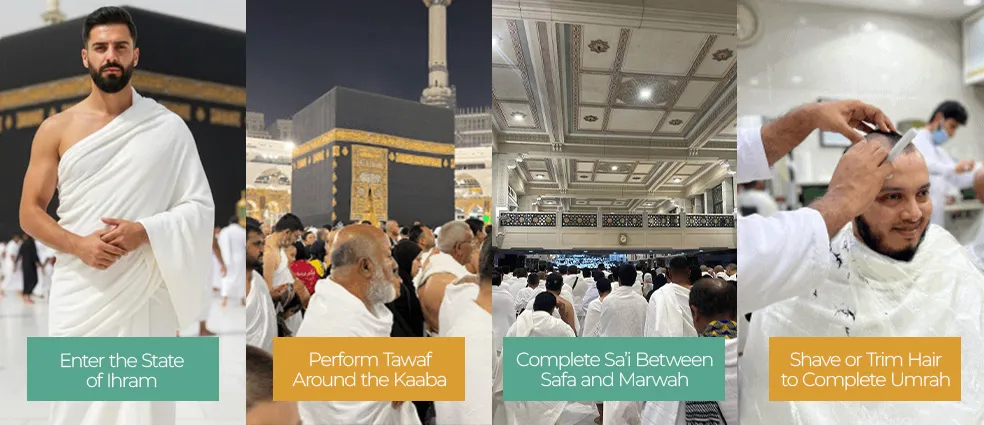
After completing Tawaf and Sa'i, the hair is shaved or trimmed. It is the final step in completing Umrah and exiting Ihram.
Many pilgrims get nervous about timing. They know shaving or trimming is necessary, but they are not always sure when exactly it should happen. Hair removal comes at the very end of Umrah. The correct sequence is:
Hair removal must happen only after Tawaf and Sa'i are fully completed. If someone cuts the hair before finishing Sa'i, it does not count as the proper ending ritual of Umrah. The person would still need to trim or shave again after completing the pilgrimage correctly. This is because shaving or trimming is connected to the completion of Umrah itself. It is not just a random haircut done at any time during the journey.
The state of Ihram also continues until the final hair removal step is completed properly. Ihram comes with certain restrictions. A pilgrim cannot simply leave this state whenever they want. The proper rituals must be completed in the correct order first.
Some people look at this ritual and think it is only about appearance. However, shaving or trimming the hair after Umrah carries a powerful spiritual meaning.
Firstly, shaving the head reminds Muslims to stay humble. Hair is often connected with beauty, fashion, and personal style in daily life. But during Umrah, pilgrims willingly let go of these things to focus completely on worshipping Allah.
This teaches an important lesson. In front of Allah, status and appearance do not matter the way they do in worldly life. What matters is sincerity, faith, and obedience.
The act also shows complete submission to the commands of Allah. Even though shaving may seem small from the outside, it becomes a sign of devotion and obedience from the inside.
Moreover, many Muslims view Umrah as a chance to spiritually restart. A fresh spiritual start means trying to become better, cleaner in the heart, and closer to Allah after worship. Shaving or trimming the hair symbolizes this new beginning in a very visible way.
Some pilgrims even compare it to leaving behind old sins and mistakes. The final hair removal step feels like closing one chapter and opening another.
Hair removal is also the official sign that Umrah has been completed. Until this step happens, the pilgrim remains in Ihram. Once the hair is shaved or trimmed properly, the restrictions of Ihram end.
This moment brings a strong feeling of relief for many people. The journey that started with intention, prayer, Tawaf, and Sa'i finally reaches completion. Pilgrims often feel thankful and emotional because Allah has given them the chance to complete the sacred pilgrimage successfully.
Lastly, Umrah teaches Muslims to focus more on spirituality and less on worldly distractions. Shaving or trimming the hair becomes a symbol of this lesson.
During Umrah, everyone dresses simply, worships together, and follows the same rituals. This removes many social differences that people normally care about. The shaving ritual continues this same message by encouraging simplicity and humility.
Yes, a pilgrim can shave their own head after Umrah. There is no rule saying a barber must do the shaving. Some people use razors themselves, while others ask a friend or family member for help. As long as the hair is removed properly after Sa'i, the requirement is fulfilled.
At the same time, many pilgrims still prefer using professional barbers in Makkah. Barbers near Masjid al-Haram are very experienced with Umrah pilgrims and usually complete the shaving quickly. Since they perform this service daily for thousands of visitors, the process becomes easy and convenient.
Many first-time pilgrims feel nervous about whether they are shaving or trimming their hair correctly after Umrah. That is why many travellers prefer booking guided Umrah Packages wiht Makkah Travel, where experienced guides help pilgrims throughout the journey and provide practical support at every step of Umrah.
Some pilgrims feel more comfortable letting a barber handle everything. Others enjoy shaving each other within family groups because it creates a memorable and emotional moment together after completing Umrah.
No matter who performs the shaving, the important thing is doing it correctly and at the proper time. The ritual matters much more than the method used.
Skipping the shaving or trimming step is a serious mistake in Umrah. Some people wrongly assume it is only a recommended extra action. But in reality, hair removal is necessary for completing the pilgrimage properly.
Hair removal is one of the required actions of Umrah. If a pilgrim leaves Makkah without shaving or trimming properly, the pilgrimage remains incomplete. This can create confusion and worry later because the person technically did not finish the rituals correctly.
Moreover, until the hair is shaved or trimmed correctly, the pilgrim remains in Ihram. This means certain normal activities are still restricted. For example, using perfume or cutting nails would still not be allowed during that unfinished state.
Lastly, in some situations, a penalty called Dam may be necessary if the rules are seriously broken. A Dam usually refers to a religious compensation, often involving the sacrifice of an animal, as per Islamic rulings.
This is why scholars encourage pilgrims not to treat the ritual casually. Following the correct sequence carefully helps avoid mistakes, confusion, and potential penalties later.
People often mix these two ideas. But there is actually an important difference between them. Removing the hair itself is obligatory, while full shaving specifically is Sunnah and more rewarding.
An obligation is something required to complete the ritual properly. In Umrah, men must remove hair somehow, either through shaving or trimming. Women must trim a small amount from their hair. This part cannot be skipped.
Sunnah, however, refers to the practice and way of the Prophet Muhammad, PBUH. Full shaving for men is considered the stronger Sunnah option because it is praised more in Hadith. That is why many pilgrims choose it even though trimming is still valid.
Shaving or trimming the hair may seem like a small part of Umrah at first, but it actually carries huge importance. This final ritual marks the completion of the pilgrimage and officially ends the state of Ihram. Without it, Umrah remains incomplete.
So, learning these rules before travelling helps pilgrims perform Umrah calmly and correctly. When each step is understood clearly, the journey becomes much more peaceful, meaningful, and spiritually beautiful.
Men must remove their hair after Umrah either by shaving or trimming. Women only trim a small amount from the ends of their hair.
Yes, trimming is allowed and fully valid for men. However, full shaving is considered more rewarding.
Hair should be shaved or trimmed after completing Tawaf and Sa'i. It is the final step of Umrah.
No, women do not shave their heads for Umrah. They only cut a small portion from the ends of their hair.
No, Umrah is not complete until the required hair-removal step is performed properly.
 SVG.svg)
Makkah Travel is here to help you visit religious places.

 Arrow SVG.svg)
 SVG.svg)