
Halq refers to shaving the entire head, and Taqsir involves trimming the hair on the head by at least an inch. Performing halq and Taqsir is mandatory to leave the state of Ihram. Umrah allows Muslims to reconnect with their faith and seek forgiveness; it is an exceptional divine experience. Among the many steps of Umrah, halq and Taqsir are of great importance. These acts not only change one's appearance but also carry profound religious meaning. If you are planning to perform Umrah, understanding each step, especially the rules related to hair cutting, is essential to ensure your pilgrimage is valid and accepted. Many pilgrims become emotional at this stage, as it symbolises rebirth, purity, and complete submission to Allah.
If you are planning to perform Umrah, choosing the right Umrah Packages can help you focus fully on worship while experienced guides assist you with every step, including Halq and Taqsir.
Halq, meaning in English," is shaving the head hair after the Umrah pilgrimage." In the Hadiths, Prophet Muhammad PBUH said, "Allah Messenger PBUH forbade AL Qaza," which refers to leaving patches of hair unshaved. The Prophet Muhammad, peace be upon him, was described as shaving his entire head during Hajj and praying for those who shaved three times, and once for those who cut their hair. This highlights men's preference for shaving. Men can shave their entire head or trim all their hair.
In the Quran Surah Al-Baqarah verse (2:196) instructs pilgrims not to shave their heads " until the sacrificial animal has reached its place for sacrifice".
In Umrah, pilgrims perform Umrah after performing tawaf and Sai. Women only trim their hair from the ends, and men totally shave or trim their head hair. In the Hajj, pilgrims perform halq after the Ramy step. This process shows the faith, rebirth and humility.
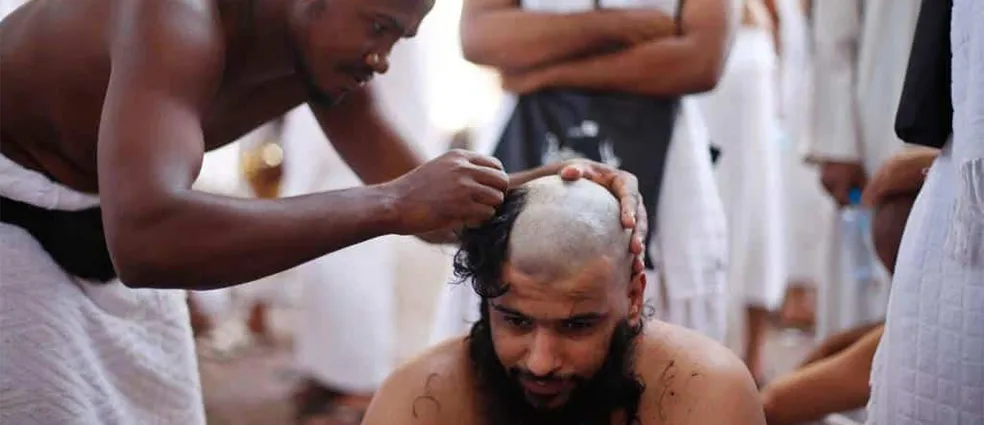
The word halq comes from the Arabic root ق ل ح, whose Meaning is: to shave, to obliterate hair, to make something smooth or clean. Halq, meaning in Arabic, is "circle". In both pilgrimages, Umrah and Hajj, Halq means shaving the head completely. One of the most essential rules in tajweed is proper articulation. In Arabic, letters are pronounced from five primary points and parts of the human vocal system known as "Makharij". One of them is known in Arabic as "Al halq," which means "throat." The throat letters are critical, especially for non-Arabs, as some of them produce entirely new sounds.
Huruf ul halq / huroof ul halq are 6 Arabic al halq letters, which are pronounced exclusively from the throat. The word halq means throat, and these letters are uniquely formed without involving the tongue, lips, and nasal cavity.
Aqsa Al-halq part of the throat is the farthest part of the throat near the vocal cords towards the chest, near the vocal cords. It is the place of articulation of two letters (hamsa)ء and (haa) ہ. These two letters are distinguished from each other by their attributes and characteristics.
Adna Al halq is the nearest part of the throat to the mouth and lips, located near the route of the tongue and the soft palate. Two letters are produced from this part of the throat: the first is ghaynغ and the second is khae خ. In pronouncing these two letters, the throat is doing the process of Makhaarij al huroof.
Yes, performing halq is sunnah. Allah says in the Quran, ""certainly Allah had shown to his messenger the vision with Truth: you shall most certainly enter the sacred mosque, if Allah pleases, in security, (some) having their heads shaved and (others) having their hair cut, you shall not fear, but he knows what you do not know, so he brought about a near victory before that"". (Surah Al Fath)
The famous scholar wrote about this verse:
In a dream, the Messenger of Allah, PBUH, saw himself entering Mecca and performing tawaf around the house. He told his companions about this dream when he was still in Madina. Some of them indeed had their hair shaved, while others had their hair shortened.
The dream of the Prophet was thus realised. During the Hajj, the Prophet had his head completely shaved. Even set the mercy of Allah on those who had shaved heads three times, and he's applied just once for those who had their hair shortened.
Prophet peace be upon him also said, "Oh Allah! Be merciful to those who have their head shaved."" The people said, O Allah's Messenger, PBUH! And (invoke Allah for) those who get their hair cut short."" The Prophet PBUH said, "O Allah! Be merciful to those who have their head shaved."" The people said, "O Allah's Messenger, PBUH! And those who get their hair cut short."" The Prophet Mohammed PBUH said (the third time), "And to those who get their hair cut short. "Nafi said that the Prophet Mohammed PBUH added, "And to those who have their hair cut short." (Sahih al-Bukhari)
In Umrah, halq refers to the complete shaving of the head. This is recommended for men as part of their last act of Omega to highlight the importance of the Umrah pilgrimage. Halq is deeply significant in Islam. It represents humbleness, submitting oneself to the Almighty, and detachment from worldly desires. Performing halq shows men's complete surrender to Allah's will. By shaving their heads entirely, they start a new chapter of devotion and holiness in their lives. However, women can only trim their hair from the ends.
There are some steps to perform halq properly:
First, choose a barber in the designated area. Ensure you perform halq in the specific areas around the Haram, as specified for pilgrims. These places are equipped with trained barbers who understand the ritual requirements.
Second, before beginning the act, utter a heartfelt Dua seeking Allah's blessings and forgiveness as an acknowledgement of fulfilling this ritual.
Third, try to ensure there is no patch of hair left on the head; the entire head should be fully shaved. According to Islamic scholars and rituals, halq offers greater rewards and blessings than taqsir. If you have any specific health issues, you can skip Halq.
In Arabic, taqsir means " to shorten " or " to lessen". It is a mandatory step in Umrah and Hajj, in Islamic usage. In the pilgrimage, it is the last step that a pilgrim performs after walking between the Safa and Marwa Hills. Men are allowed to perform either taqsir or halq. Taqsir is valid and accepted, but halq offers greater rewards and blessings. Women are not allowed to shave their heads fully; they may only perform Taqsir. Typically, they can cut a small portion of their hair from the ends.
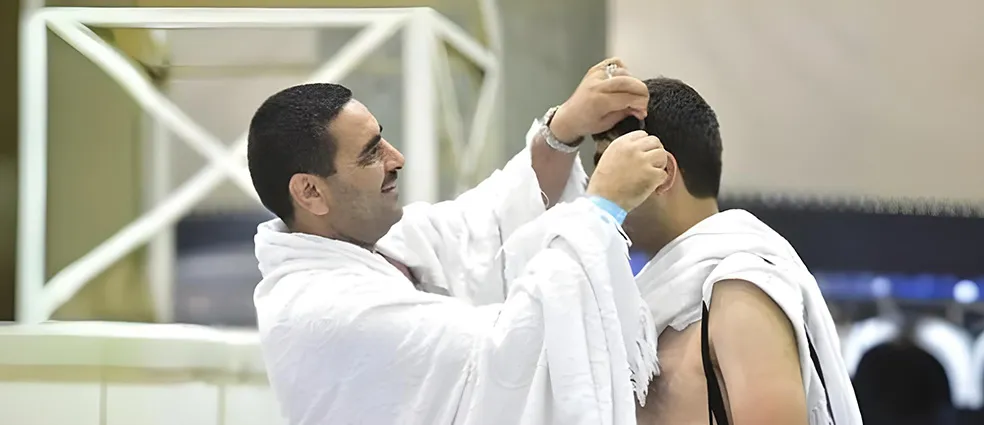
Taqsir, meaning in English, is the trimming of hair instead of completely shaving the head. This ritual is an alternative to halq and is generally performed by women or men who prefer not to share their heads. Taqsir requires trimming at least the length of a finger's tip, which suffices as an act of humility and submission. For women, taqsir is mandatory as halq is not allowed. With any female colleagues, women often use scissors to trim their hair. This act refers to the rebirth and the forgiveness of past sins.
Some acts are assigned to perform taqsir correctly. First, ensure proper timing. Like Halq, Taqsir must be done after completing all other Umrah steps, including tawaf and sai. You can't perform it earlier. Secondly, it is necessary to choose the right tools. Women must keep sanitising scissors with them. If men need a trim, they can visit the barbershop. Lastly, make an intention and recite prayers. This act shows humbleness and purity.
During the Umrah pilgrimage, Taqsir and Halq are two essential acts. Taqsir involves shortening or trimming hair and can be performed by both men and women. Taqsir shows and marks the completion of particular rites. The amount of hair cutting during Taqsir varies among different Islamic schools of thought. Halq is the practice of shaving the entire head, reserved for men. Halq is considered a more thorough form of hair removal than taqsir. Halq is mandatory for men in specific situations, especially during their first pilgrimage. Although women are permitted to perform halq, they only perform taqsir. When performing halq, it is recommended to face the Kaaba. Shaving should start from the right side of the head, leaving no tufts of hair. But both acts signify the end of the state of Ihram during pilgrimage. While mandatory, Taqsir and halq are not pillars of Hajj and Umrah.
Aspect | Halq | Taqsir |
| Meaning | Complete shaving of the head | Trimming a portion of the hair |
| Islamic Status | Sunnah with greater reward | Permissible and widely practiced |
| Permitted for Men | Yes | Yes |
| Permitted for Women | Not allowed | Yes and mandatory |
| Spiritual Significance | Represents complete renewal and humility | Symbolizes partial renewal and obedience |
| Used During | Umrah and Hajj | Umrah and Hajj |
Taqsir for men is allowed, or men may choose Taqsir when planning to perform another Umrah or when they want to avoid shaving completely. They can also choose the same if their skin is sensitive to razors. Another option is to have only the minimal requirement.
Halq for men is allowed, or they can choose to perform halq when completing Umrah and returning home. They can also select halq to receive more blessings and rewards if you are not planning for Umrah soon. You want a fresh start to your faith.
In Islam, halq is not for women. They are not allowed to shave their head fully. After their pilgrimage, they can trim fingertip length or trim evenly from the end of the hair. Women should ensure that a mahram or another woman cuts their hair. Women are also allowed to perform it after Sai (walking between Safa and Marwa).
After completing the tawaf and sai in Umrah, you can shave or trim your hair. Second, exit the ihram area. Most pilgrims do it near the barber shops around Masjid Al Haram. If men are choosing halq, then they should sit with a licensed barber. They even shaved their whole head. Always use a new blade. Start your process with intention in your heart.
If men are performing Taqsir, they can trim their hair from all sides. Try to trim equally from all sides. Men are not allowed to cut from one side. Also, men should avoid shortcuts.
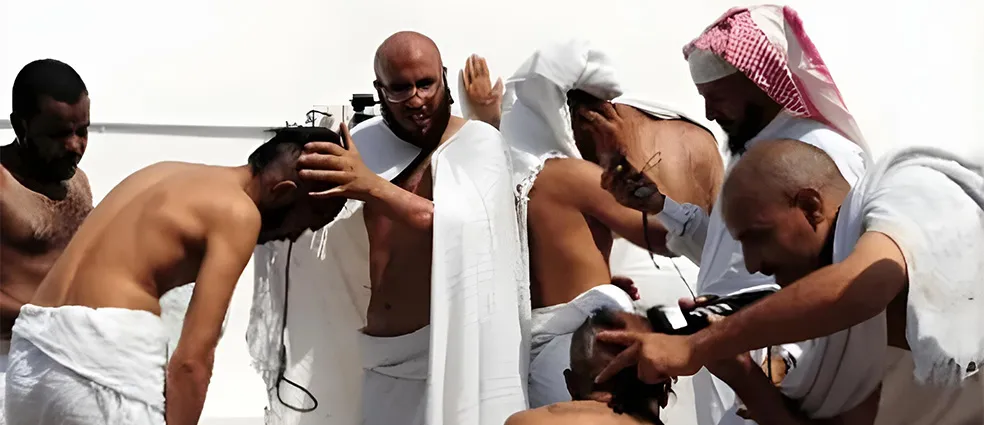
The processes of Halq differ between the two pilgrimages, Hajj and Umrah. In Umrah, pilgrims can do halq after walking between Safa and Marwa. But Hajj has other protocols, such as Halq, which is performed after stoning the jamarat on 10 Dhul-hijjah. This process shows the total submission to Allah. In Hajj, men shave, and women only trim their hair.
When performing halq or Taqsir, many pilgrims make avoidable mistakes. Here are some points to help you avoid mistakes: remember that halq and Taqsir must be performed only after completing tawaf and sai. Keep in mind that the hair is entirely shaved for halq or trimmed properly for Taqsir. Any mistake in performance can invalidate the ritual. Try to avoid using unauthorised services. Always connect with the designated barbers around Haram for proper guidance. Lastly, don't avoid the intention, because every act of worship requires a sincere intention for Allah.
Halq and Taqsir are not just haircut rituals; both these steps are full of humbleness and submission to Allah. They remind us to shed our ego, detach from superficial entities, and begin a new life with sincerity and holiness. Halq is the process of completely shaving the head, and Taqsir means trimming the head. Both these acts must be done with pure intention. During the Hajj, you can perform this act in Mina and in Umrah, you can go to any barber shop near the Haram.
No, but it is the most rewarded Sunnah. Taqsir is entirely accepted. Although a man doesn't need to perform Halq (shave his head) after Hajj, it is recommended. However, if you do not wish to cut off all your hair, you must perform Taqsir (trimming of the hair) as it is a Sunnah. Some rules and regulations related to performing Halq and Taqsir are as follows:
When shaving one's hair, ensure the entire head is shaved; partial shaving isn't acceptable.
If one is bald, to begin with, one must still use a razor to complete the ritual.
While performing Halq, remember to face the Qibla and start shaving from the right side.
Yes — women must do Taqsir; Halq is prohibited for them. Women perform Taqsir only — cutting about one fingertip's length from all ends of the hair. Shaving the head is not permitted for women. Even women with short hair must trim slightly from all ends. Ali R.A said, "The Prophet Muhammad forbade women from shaving their heads."
Men should have at least 1 inch of clearance on all sides, and women should have a fingertip length cut. Usually, the minimum length to cut is an inch from all ends of the hair. Some scholars say hair should be trimmed from all over the head by at least a finger's length, specifically for women, as they are not allowed to shave their heads. This idea symbolises detachment from worldly desire for both men and women. It also symbolises the removal of the Ihram and signifies spiritual purity.
Yes, but men usually use barbers; women trim themselves or have another woman do it. Both men and women may exit the state of Ihram after trimming their hair. For men, halq is an ideal state. And for women, they can just cut their finger-length hair. But both women and men must do this ritual after completing the whole Umrah. A family member and a spouse can also help you in taqsir and halq.
Better to avoid; there are designated shaving areas outside. But you can also perform taqsir and halq inside the Haram, as it is a common practice. If you're going to shave your head or trim your hair, it is mandatory to choose a licensed barber who can be found in or around the Haram. But for these rituals, both men and women should complete their Umrah first.
You must repeat trimming after Sa'iSa'i. You committed an error as this action is prohibited before the exact time. But your Umrah is still valid. You must take immediate action to correct the situation, such as paying a penalty (Damm and Fidyah). Each school of thought have a different opinion about the penalty. Damm means sacrificing an animal within the boundaries of Haram in Makkah.
Yes — if it cuts hair completely. Electric machines also offer options like using a Zero machine for Halq, which removes all hair, leaving you bald. And if you use a machine on Level 2 or 3, it doesn't remove your hair thoroughly, which means you have done Taqsir. Many scholars say that an electric trimmer set to zero is still considered taqsir. If you have very little hair, using a zero setting trimmer may not be enough to fulfil the ritual of taqsir or halq, as it doesn't remove the hair from the surface like a blade.
Yes — shaving the head is associated with the dua of the Prophet ﷺ. It symbolises a new start and divine rebirth like a newborn baby. It is considered a superior act for men compared to Taqsir because it brings multiple rewards and heavenly mercy, as the Prophet Muhammad PBUH prayed three times for those who shave their heads.
Immediately after Halq or Taqsir. Exiting the state of Ihram during Hajj is an essential step for pilgrims.
Both men and women exit the Ihram after stoning Jamrat Al-Aqabah.
Men also need to shave their heads or cut their hair. Women only need to cut a small portion of their hair.
For Umrah, the Ihram state ends for both genders after completing Tawaf and Sai. Men then either shave or cut their hair, while women cut a small portion of their hair.
You must perform Halq or Taqsir after every Umrah. It is highly recommended and considered a blessing, as the Prophet Mohammed prayed three times for those who shaved their heads. Partial shaving is not allowed; the entire head must be shaved for halq or Taqsir. This ritual is also highly rewarded, and without it, you can't remove your Ihram.
 SVG.svg)
Makkah Travel is here to help you visit religious places.

 Arrow SVG.svg)
 SVG.svg)