
Safa and Marwa are essential to every pilgrim. Walking between these two hills during Sa'i in Umrah is a special time for sincere prayer and deep reflection on your faith. Saying dua while walking helps you stay closer to Allah with each step you take.
Safa Marwa dua refers to the prayers Muslims recite while walking between two small hills called Safa and Marwa. This walking is called Sa'i. Sa'i is done during Umrah and Hajj. Muslims perform Umrah and Hajj pilgrimages to Makkah, the holy city. People say these prayers to ask Allah for mercy. They also ask for guidance and help while they complete this essential part of the pilgrimage.
Allah also talks about Safa and Marwa in the Quran. He says, "Indeed, Safa and Marwa are among the symbols of Allah" in Surah Al Baqarah 2:158. This shows that Sa'i is a special act. It also indicates that remembering Allah while walking between these hills is very important.
Lastly, Sa'i also reminds Muslims of the story of Hazrat Hajar. Hazrat Hajar was the mother of Prophet Ismail. She ran between Safa and Marwa looking for water for her son. She trusted Allah completely and never gave up hope. So when pilgrims say the Safa Marwa dua, they remember her dedication. They also show their trust in Allah during this sacred journey.
Praying or saying a dua during Sa'i makes every step between Safa and Marwa more special. When you recite a dua, it gives your act more meaning. It transforms the act of walking into prayer and a means of connecting with Allah. There is no single dua that everyone must say during Sa'i. Each person can choose what to say. However, many duas are suggested and commonly said by pilgrims. So, below is a list of the recommended duas.
When you reach Safa for the first time, face the Kaaba. Begin by remembering that Safa and Marwa are essential signs of Allah.
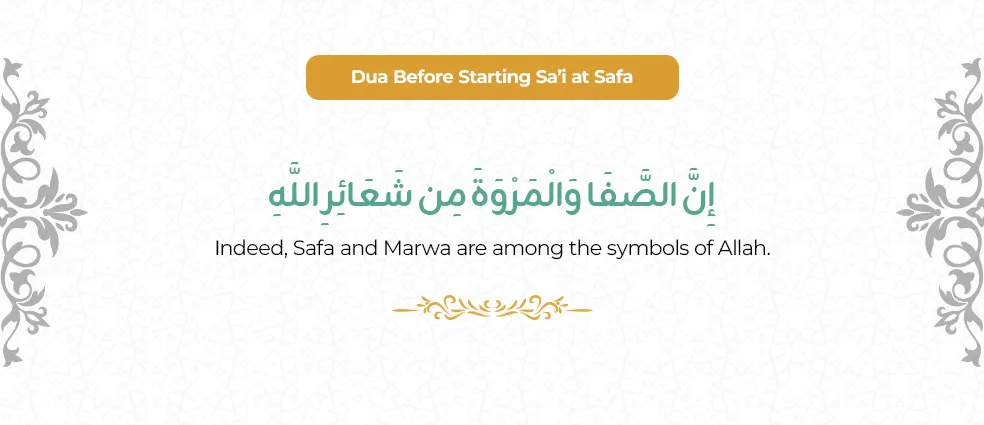
إِنَّ الصَّفَا وَالْمَرْوَةَ مِن شَعَائِرِ اللَّهِ
Innaṣ-ṣafā wal-marwata min shaʿāʾirillāh
“Indeed, Safa and Marwa are among the symbols of Allah.”
After this, it is recommended to say Allahu Akbar three times. Then recite the following dua.
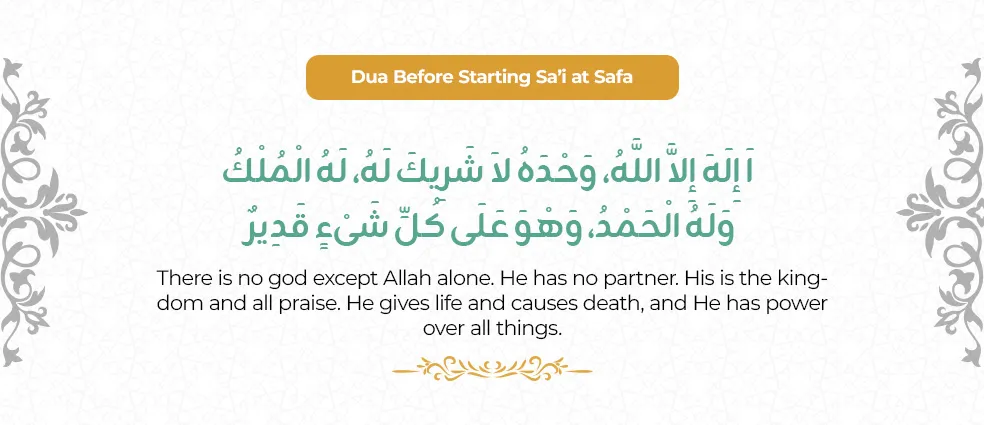
لَا إِلٰهَ إِلَّا اللّٰهُ وَحْدَهُ لَا شَرِيكَ لَهُ
لَهُ الْمُلْكُ وَلَهُ الْحَمْدُ
يُحْيِي وَيُمِيتُ وَهُوَ عَلَىٰ كُلِّ شَيْءٍ قَدِيرٌ
Lā ilāha illallāhu waḥdahū lā sharīka lah
Lahul-mulku wa lahul-ḥamd
Yuḥyī wa yumīt wa huwa ʿalā kulli shayʾin qadīr
"There is no god except Allah alone. He has no partner. His is the kingdom and all praise. He gives life and causes death, and He has power over all things."
You can repeat this supplication three times. Between each repetition, you can make your own personal duas.
There is no set dua that you must say while walking between Safa and Marwa. You can say any dua that feels true and important to you. You can also remember Allah in your heart as you walk. This means you have the freedom to speak to Allah in your own way. It's an opportunity to feel close to Him. You can make prayers for yourself, for your loved ones, or for anything that matters to you. This freedom is part of what makes Sa'i special.
Some commonly recited duas are as follows.
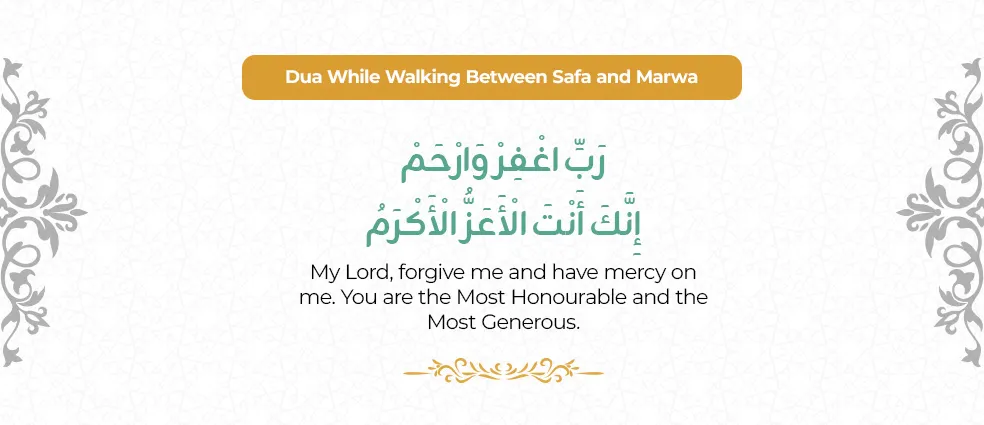
رَبِّ اغْفِرْ وَارْحَمْ
إِنَّكَ أَنْتَ الْأَعَزُّ الْأَكْرَمُ
Rabbighfir warḥam
Innaka anta al-aʿazzu al-akram
"My Lord, forgive me and have mercy on me. You are the Most Honourable and the Most Generous."
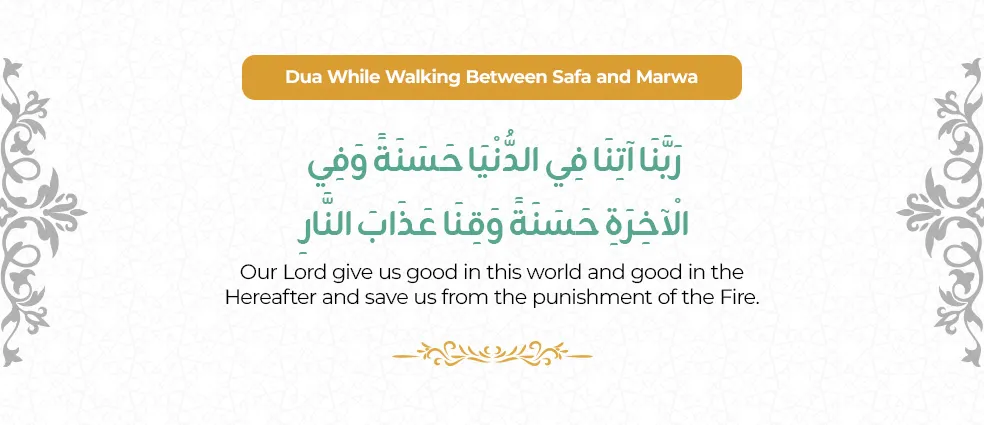
رَبَّنَا آتِنَا فِي الدُّنْيَا حَسَنَةً
وَفِي الْآخِرَةِ حَسَنَةً
وَقِنَا عَذَابَ النَّارِ
Rabbana atina fid-dunya hasanatan wa fil-akhirati hasanatan wa qinaa 'adhaaban-naar
"Our Lord give us good in this world and good in the Hereafter and save us from the punishment of the Fire."
Men are urged to move swiftly between green lights, but women continue to walk at a normal speed.
When you get to Marwa, make sure you are facing the Kaaba. Here, say the same duas you told when you were at Safa. Saying these prayers at Marwa finishes one round of Sa'i.
Reciting the dua during Sa'i should be calm and full of meaning. You do not need to remember long prayers or follow a strict order. What matters most is that you pay attention, show respect, and are sincere when you do this vital act of worship.
During Sa'i, pilgrims are encouraged to say their own personal prayers along with the recommended duas. You can say your prayers in any language. Allah understands all prayers that come from a sincere heart.
Moreover, it is essential to observe good manners when reciting the Safa Marwa dua. Pay attention to what happens around you. Do not speak loudly in a way that may disturb other pilgrims. Keep your mind on worship and not on talking. Walking calmly and with patience shows the true spirit of Sa'i. This helps you focus on your prayers.
Lastly, you should avoid common mistakes during Sa'i. So, do not push other pilgrims or rush through the walkway. This can make it hard for everyone else. Also, make sure you complete all seven rounds correctly and in the correct order. Being careful and respectful helps you perform Sa'i smoothly. It also keeps the ritual meaningful and dignified.
The Safa Marwa dua is very important in Sa'i. The dua makes the walk more than just going from one hill to the other. Saying the recommended duas helps pilgrims remember Allah. It also helps them feel close to Him while respecting the story of faith and patience linked to Safa and Marwa. The prescribed supplications give a straightforward way to follow the ritual. However, the true importance comes from having a sincere intention. So, pilgrims should say the words with full attention.
It does not matter if a pilgrim follows the traditional duas or says personal prayers. Both are accepted. Doing Sa'i with focus and humility shows respect and trust in Allah. It ensures the ritual is done with understanding and devotion. The effort and sincerity of the pilgrim are what give Sa'i its real value. For pilgrims preparing for Umrah, understanding these rituals in advance allows them to perform Sa’i with confidence and peace of mind. Having well-planned Umrah packages also helps pilgrims focus fully on worship rather than travel arrangements.
Yes, women say the same Safa Marwa duas as men during Sa'i. There is no difference in the prayers they recite.
Both options are allowed. Many pilgrims choose to recite quietly so they can stay focused and avoid disturbing other people doing Sa'i.
Yes, duas can be said in English or any language that you understand. What matters most is sincerity in your prayers, not the language you use.
Yes, using transliteration is completely fine. It is invaluable for pilgrims. It allows them to say the recommended duas correctly, even if they do not know or understand Arabic well.
People usually say the special prayers at Safa and Marwa three times. Between these three times, they make their own personal prayers and ask Allah for what they need.
 SVG.svg)
Makkah Travel is here to help you visit religious places.

 Arrow SVG.svg)
 SVG.svg)