
Ramadan is the month of blessings and is regarded as one of the most holy months in the Islamic religion. Prophet Muhammad (PBUH) said: At the start of the month of Ramadan, the gates to heaven are opened, the gates to Hellfire are closed, and devils are chained. And Umrah is the pilgrimage to the holy city of Makkah, where every murmur of your dua is heard, and your good deed reward is increased. Just imagine what it would be like when two significant events are united, such as visiting Umrah during Ramadan! How great the prize that it possesses! In yet another Hadith, our dearest Prophet (PBUH) said: An Umrah during the month of Ramadan is equal to Hajj (in reward), or in other words, equal to Hajj with me. Although there are numerous positive aspects associated with it, it can also become both physically and mentally exhausting. It is challenging when one is fasting and constantly on the move. You can lose energy and focus. The last thing you need to do is to calmly concentrate so that you get the most out of your trip. Be mindful and prepared, and you will sustain your physical energy and remain connected to the spirit throughout the journey.
Ramadan 2027 is expected to start between Monday, February 8, 2027, and Tuesday, February 9, 2027, the exact date depends on when the moon is sighted. Winter is an ideal time to perform Umrah. When the days are milder and you don't have to deal with the scorching summer heat, this automatically makes your Umrah experience much better. It means you have more energy for prayer, performing Umrah rituals, reading the Quran, and doing dhikr. Winter Ramadan feels calm and comforting. The days are shorter, so fasting is less tiring. This comfort enables pilgrims to focus entirely on their worship, allowing them to perform rituals with greater ease and serenity.
Umrah is a spiritual and physical act of worship that involves a series of rituals and practices. You must perform Tawaf and Sa'i, which are physically demanding. When it comes to performing Umrah in Ramadan, every believer gets excited. But during Ramadan, your energy is even lower because you are fasting and surrounded by a vast crowd. And you know why? Because you are low on sleep and food. And we all know Ramadan is a month when the blessings of Allah are multiplied, and you should get the most out of it. When you start preparing yourself spiritually, it is equally necessary to focus on your physical health. Because you might become tired for a while, it's essential to have something that keeps you motivated. If we consider the spiritual aspect, we are motivated to know that we are in the house of Allah and that we are fulfilling a lifelong dream of performing Umrah during Ramadan. For the physical aspect, you need to prepare yourself by taking care of your physical well-being.

Planning to perform Umrah in Ramadan? And want your Umrah and Ramadan fast to feel much easier? Don't wait until the last minute! You should start preparing as soon as you know your travel dates. Start preparing your mind and body for the effort of travelling and fasting during Ramadan. Your small acts, such as adjusting your eating, sleeping, and thinking habits, will make travel much easier and help you settle in upon arrival. Just know that for every struggle or hardship you feel whilst fasting, Allah will certainly reward you plentifully for it. Just bear patience and remember Allah much and hope for a great reward from him.
Planning to perform Umrah in Ramadan and haven't figured out how to keep your energy up and feel stronger for fasting before it starts? Let us provide you with the simple answer: Eat wholesome and balanced meals. You should take whole grains, fruits and lean proteins. This type of food will give you steady energy. If you follow this diet plan, it keeps your body strong and energetic while fasting. And the flip side? Avoid junk food, such as fries and processed foods, which can lead to weight gain.
Staying hydrated is key to maintaining energy. Drink lots of water every day, not just when you fast. If you are adequately hydrated, this will help you focus, especially in hot weather. And what's the good news? Ramadan in 2027 is expected to fall in February and March, which means the weather conditions will likely be milder. You should skip Caffeine and sugary drinks, because they can cause your body to lose water.
To prepare yourself for Umrah during Ramadan, you need to build stamina so you can perform the rituals while fasting without getting drained. To achieve this, start with light exercises, such as walking and stretching. When you start doing exercise before setting out on your journey, you are preparing yourself for the physical demands of travel and rituals without causing fatigue.
Adjust your sleep schedule gradually to accommodate the Ramadan fast. This prevents you from becoming too tired and keeps you alert. Adjusting your sleep cycle before Ramadan begins helps you wake up for Tahajjud and maximise the benefits of your journey. A pro tip on how to manage your sleep is to start practising it by setting your alarm for Tahajjud prayer. When you create your schedule, waking up for Tahajjud daily will become easier for you as well. If you get enough sleep, it'll help you to stay focused and energetic during your sacred journey.
What you think inside is a reflection of what you experience physically. So, making a good intention will set your mindset to thrive in a physically challenging environment or situation. Start preparing inside now. Reflecting on gratitude and patience will keep you strong and peaceful during the fasts and while travelling.
These small steps work together to strengthen your body, improve your focus, and reduce exhaustion. By preparing early, you'll arrive feeling ready, centred, and energised.

The energy you'll have all day while fasting comes from what you eat and drink for Suhoor and Iftar. Eating the right foods and drinking enough water helps keep you physically and mentally strong, preventing you from feeling tired.
When you are fasting, it is essential what you eat in Suhoor. You should choose food that acts like slow fuel because you need maximum energy while performing Umrah rituals. You can eat whatever suits you best and keeps you energetic. You can try oats, whole grains, eggs, and fruits like bananas and apples. Don't forget foods rich in water, such as cucumber, yoghurt, or watermelon, to help keep you hydrated.
When it's iftar time, you should not rush. Start slow, like with a few dates and water. This helps wake up your body and gives you a quick boost of energy. After that, take a substantial meal to replenish your energy. You can add a small part of your favourite meal to satisfy your appetite. But avoid eating fried or heavy food immediately after breaking your fast. It will make you feel tired and slow, because you need to be energetic for the Tarawee prayer.
You should drink 6 to 8 cups of water every night between Iftar and Suhoor. Please don't drink it all at once! Sip slowly over the whole evening. Try herbal tea or add lemon or mint to your water to make it tastier. Avoid coffee and soda. You should skip energy drinks and coffee. They make you dehydrated and tired later.
After a full day of fasting, you'll really want a big meal, but resist the urge! To stay healthy, avoid overeating at once. This can cause you to feel tired, bloated, and uncomfortable during your Umrah. Instead, start with a small amount of food, eat slowly, and listen to your body when it says it's full.
Don't worry about being completely "full." Just eat enough to give you lasting energy! This helps you stay light and comfortable, making it much easier to focus and move easily through your Umrah.
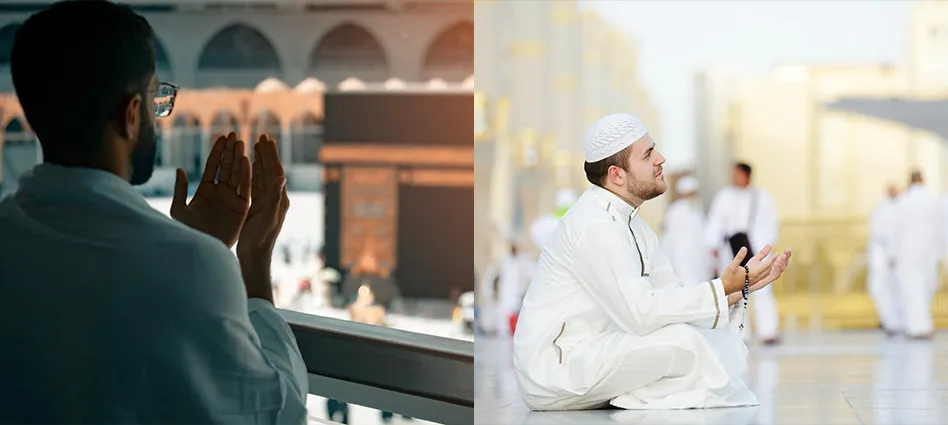
When you are fasting, you need to manage your energy in a way that keeps you feeling energetic throughout the day. The whole day of fasting can sometimes drain your energy, and you might feel overwhelmed. Here are a few ways to retain that energy.
To make your worship easier, avoid peak times. Choose a time when the sun is gentle and there are fewer people. The best slots are drawn (after Fajr) or during the late night (after Isha/Taraweeh). You can conserve your energy and worship peacefully by avoiding the hot, busy midday hours.
Don't rush because you think you have limited time. Allah knows the intentions of his servants and doesn't want to burden their souls, so take rest to restore your energy whenever you find time.. Be gentle on yourself. Take breaks between prayers. Find a cool, shady, or air-conditioned spot to rest. Keep yourself hydrated when you are not fasting and stretch your legs whenever you have a chance. This is the way to keep yourself energetic and focused.
If you think that you'll only get a reward if you are involved in physical worship, you are wrong. It's not always like that, though. Sometimes, all you need to do is sit quietly, make dua, reflect, or read the Quran; it is just as valuable as any other part of worship. Sometimes, the best thing you can do is just be still. It is like a spiritual and mental battery recharge.
When you begin to feel weak or dizzy, don't be too hard on yourself and get some rest. Since health is a priority, being healthy allows you to be more focused when performing rituals. Short breaks will enable you to conserve your energy until the end of the day.
Our worship and the reward of it are not judged by the quantity of rituals that we do, but by the intention and the concentration that we apply to the prayer. The only requirement is to be genuine in your heart when performing Ibadah, whether with a slow pace to ensure you are present and thankful throughout each prayer session.
To stay focused, you need to have a clear and calm mind.
Patience and a grateful heart will bring you peace.
The best time to do Umrah is during Taraweeh, after the Isha prayer. If you're going before the last 10 days, you can catch some sleep between Taraweeh and Fajr; otherwise, if you've been fasting for the previous 10 days or perform Tahajjud on your own. Then you can sleep after Fajr and wake up about an hour before Asr. Pray Dhuhur and then go to catch the Asr prayer in the Haram. You can also take a nap for an hour after Iftar till Isha time.
Your health should be your priority. If you feel dizzy or dehydrated after breaking your fast, it means your body is signalling you to rest and listen to what your body demands. If you still don't feel better, please consult a doctor or visit a clinic. It is really easy to find them in Makkah and Madinah.
When you have a reputable travel agency like Makkah Travel, everything becomes manageable. We are here to guide you through every step of your journey. Our crew can easily guide you to the nearest medical assistance and provide you or any other pilgrim with the necessary support. Being responsible for yourself and others during Umrah is a reward, and we are glad to assist you in doing so.
You can try various things as recommended, but you may not achieve full normal energy. You gotta grind through it sometimes. But this is part of the point of the month. Allah shows us how dependent we are on His bounty and nourishment, such that even refraining from it a little bit weakens us so much. It is a reminder to be grateful for food, drink, and sleep, and a reminder that all power and might ultimately belong to Allah alone. Our real condition is one of need and weakness, and it is only through Allah that we find strength and energy.
If you are taking prescription medicine, consult a healthcare professional and your doctor first before travelling. Ask your doctor to schedule your medications around Suhoor and Iftar, or consider taking non-oral drugs that don't break the fast.
As Ramadan in 2027 will fall in February and March, the weather will be mild, so it's advisable to pack a jacket and warm clothes for cool evenings. You should also bring odourless aromas, a reusable water bottle, and a mini prayer. Don't keep unnecessary stuff that you don't need.
Yes, you can do it when you have already organised your own Umrah or Hajj and want to do it in their favour.
When fasting becomes too difficult or is damaging your health, you may break your fast and make up for it later. Islam does not require hardship that harms your health.
Women should plan. If they are menstruating, the Umrah can be postponed until purity is achieved. Females are also able to perform dhikr, dua and even participate in prayers beyond the Haram premises.
Yes, you should book your Umrah 3-4 months in advance, especially if you are travelling during the last ten days of the month. Ramadan is a hectic month, and if you don't book your Umrah package early, you'll have to pay higher prices and may not get the hotels and flights of your choice.
One can download the Quran, Duas, Makkah/Madinah navigation and prayer times apps. Others even take you through the rituals of Umrah one by one.
You may make dua on behalf of another person during your Umrah or fast on their behalf separately; however, the Umrah must be performed according to your own intention, unless it is specifically dedicated to other people.
Keep a miswak, stay relaxed, and spend time in dhikr or reciting the Quran to remain spiritually focused and patient.
 SVG.svg)
Makkah Travel is here to help you visit religious places.

 Arrow SVG.svg)
 SVG.svg)