
For Muslims, the umrah pilgrimage is a spiritually healing journey. Some specific rules and rituals are observed to determine whether your pilgrimage is in accordance with Sunnah. Before entering Mecca and performing Umrah, the primary precondition is finding the Miqat. Many first-time pilgrims don't know about Miqat, its location, or how to observe it correctly.
Miqat refers to the boundary where it becomes necessary for pilgrims to don the Ihram garments and is impermissible to pass except in the state of Ihram. Those who cross the boundary without having entered into the state of Ihram must perform animal sacrifice as expiation. Millions of people travel to Saudi Arabia for Hajj and Umrah pilgrimages every year. Umrah and Hajj, both pilgrimages, have specific rules and regulations, as with any religious ritual. One of the rules for pilgrimage is adhering to Miqat boundaries. According to etymology, "appointed time or boundary" is the literal meaning of Miqat.
The concept of Miqat is divided into two types, Miqat zmani and Miqat makani.
Miqat zmani is the time specified for any action, such as the times for prayer, as mentioned in the holy Quran: "They ask you about the crescent moon. Say, these are times for the people and for the Hajj. Here, it means the times for the Hajj.
Miqat makani are the places assigned explicitly by the noble Messenger for Muslims. These are the places to enter Ihram for the Hajj and Umrah rituals. Hajj and Umrah, both pilgrimages, are not accepted unless one enters into Ihram at the designated Miqat for each country.
All muslim pilgrims need to enter the holy kaaba in the state of purity. It prevents casual travel to Makkah while maintaining a spiritual framework. Miqat points are not arbitrary; they were established by the Prophet Muhammad ﷺ and are still recognised today across Saudi Arabia. The Prophet Muhammad, PBUH, personally designed the Miqat boundaries.
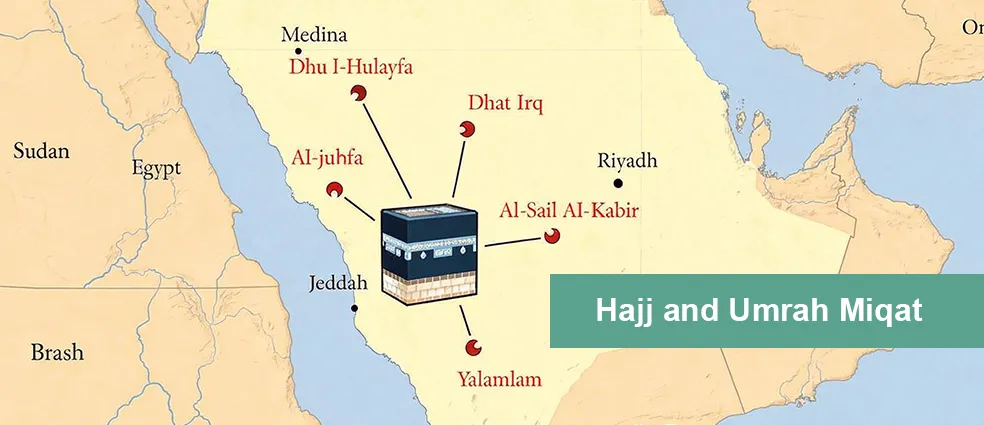
There are five mikats in total, four of which are mentioned in the following Hadith.
Allah's Messenger had fixed Dhul Hulayfah as the Miqat for the people of Madina, Al juhfah for the people of Sham, and Al qarn Al manazil for the people of Najd, and Yalamlam for the people of Yemen. So, these are the mawaqit for all those living in those places, and besides them, for those who come through those places with the intention of performing Hajj and Umrah and whoever lives within these places should assume Ihram from these dwelling places. Similarly, the people of Makkah can assume Ihram from Makkah.
Abdullah ibn Umar narrates: when these two towns, Basra and Kufa, were captured, the people went to Omar and said, Achievement of the faithful believer! The Prophet, peace be upon him, fixed Qarn as the Miqat for the people of Najd; it is beyond our way, and it is difficult for us to pass through it. He said, "Take as your Miqat a place situated opposite Qarn on your usual route." So, he fixed Dhat irq as their Miqat.
The relation to wearing Ihram is one of the most essential features of Miqat. Ihram is a divine cleansing which is mandatory before visiting the sacred cities of Mecca and Madina. The dress of pilgrims is simple, unstitched white clothes that symbolise equality before Allah and their rejection of worldly desires. After crossing the Miqat point, a pilgrim must recite the talbiyah. This prayer expresses their intention to perform Hajj or Umrah. This is the start of their pilgrimage. Ihram clothes are not only material items but also a spiritual condition that psychologically and emotionally prepares the pilgrims for the spiritual journey.
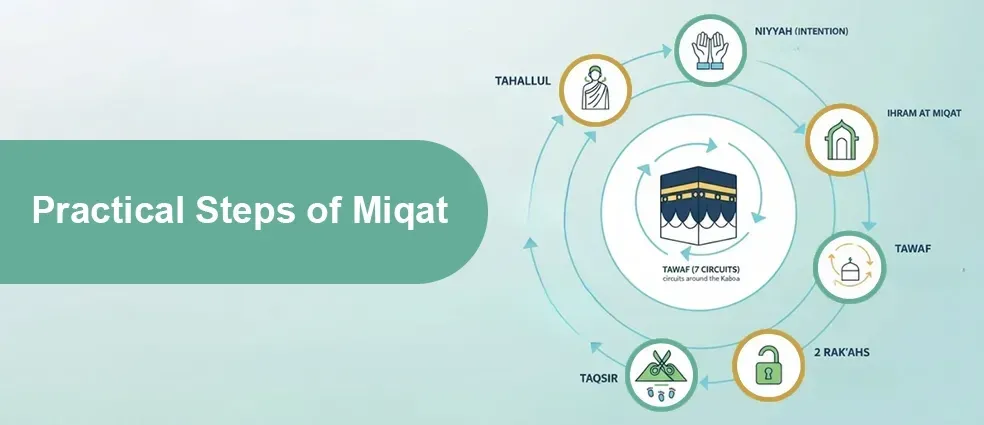
Regarding Miqat, there are many helpful points to consider for people travelling to perform Hajj or Umrah. Before pilgrims pass the Miqat, they should ensure they reach it. Wearing the Ihram is necessary, and making the required prayers at the Miqat is needed. If you are travelling from any agency, make sure your itinerary has the right Miqat station, depending on where you are leaving. Before passing Miqat, pilgrims are supposed to engage in personal cleansing, including ghusl, and to prepare spiritually for the journey they are about to undertake. There are a few things that are prohibited when you are in Ihram and in the Miqat zone. For example, you are unable to have marital relations, put on perfume, or even talk too much. This is a moment of reflection, humility and devotion.
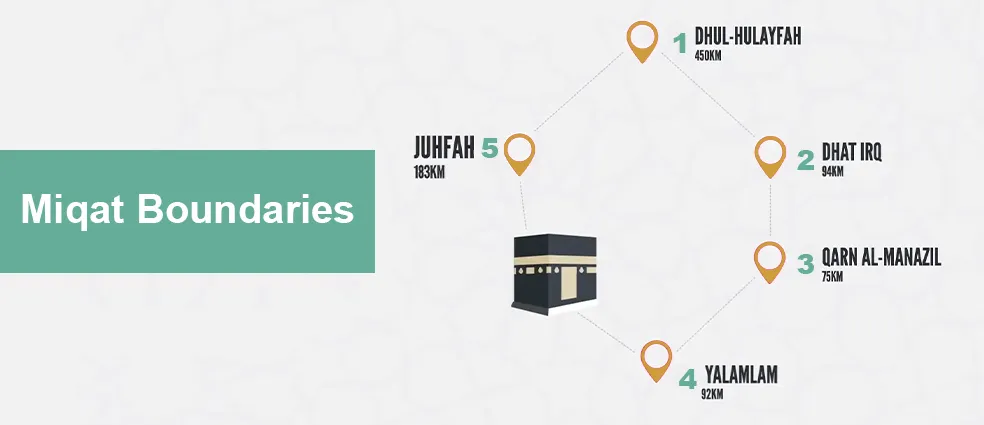
There are five Miqat boundaries in total: Dhul Hulayfah, Al juhfah, Yalamlam, Qarn Al Manazil, and Dhat Irq.
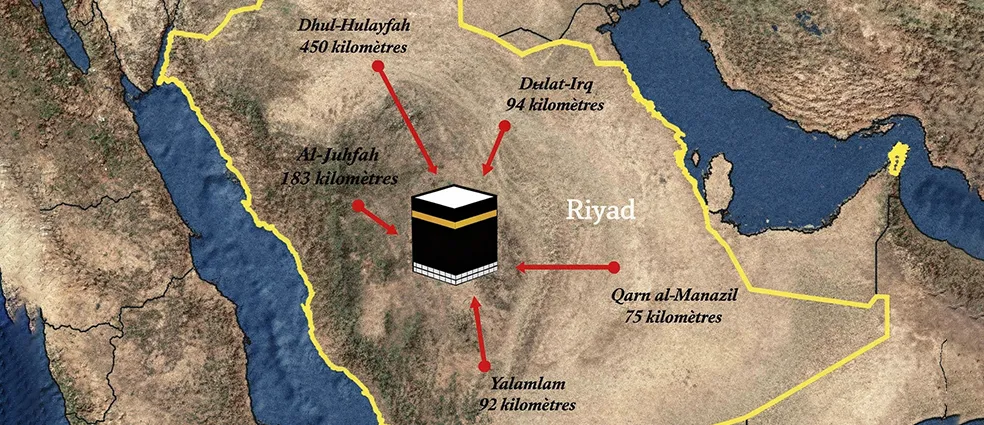
This is the Miqat for Madina residents and those travelling from the north to conduct Hajj. Everyone performing Hajj from Madina is required to wear Ihram at the Miqat of Madina. Moreover, going to masjid Dhul Hulayfah to put on Ihram is optional. Also, you can wear it on the boundaries of mosques. It is around 420 km from Makkah and situated in the southern section of Al Madinah.
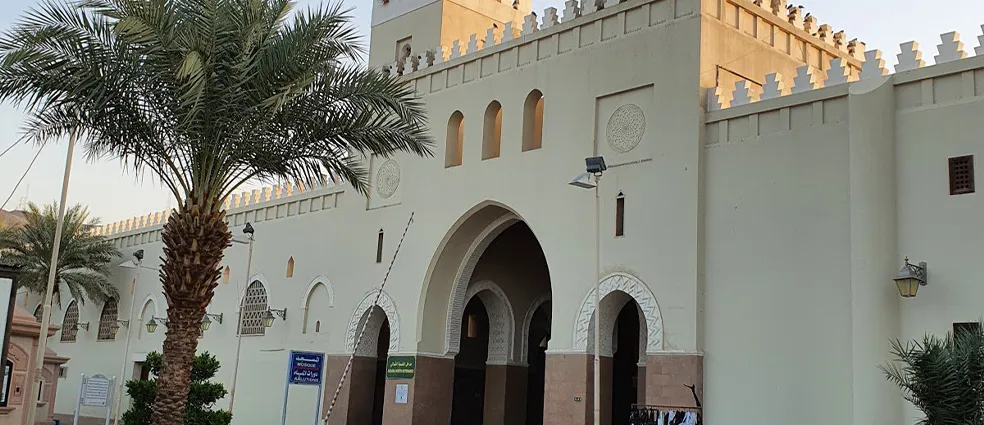
Al Juhfah is located 182 km northwest of Mecca, 17 km southeast of Rabigh, 160 to 190 km from Jeddah, and 15 km East of the Red Sea. Masjid Miqat Al Juhfah has a total area of 900m and accommodates approximately 220 worshippers. Pilgrims may enter into Ihram at the town of Rabigh, as it is roughly on the same plane as Al Juhfah, with Rabigh being slightly higher in latitude. Pilgrims from Syria, Palestine, Egypt, Morocco, and Spain use this Miqat for Hajj and Umrah.
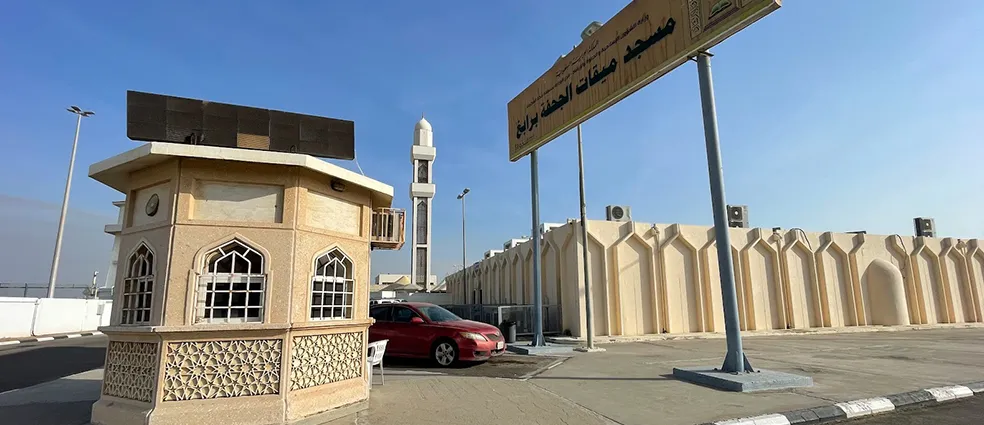
This Miqat site is specially for the pilgrims coming from Yemen. Before entering their destination, pilgrims coming from Yemen stop at this Miqat to enter the state of Ihram. Moreover, this Meeqat is also called Al Sadiyah. In a hilly area, 92 km Southeast of Mecca, Miqat is situated. If you are coming by sea from India, Pakistan, China, Japan, or elsewhere, this Miqat is also your Miqat.
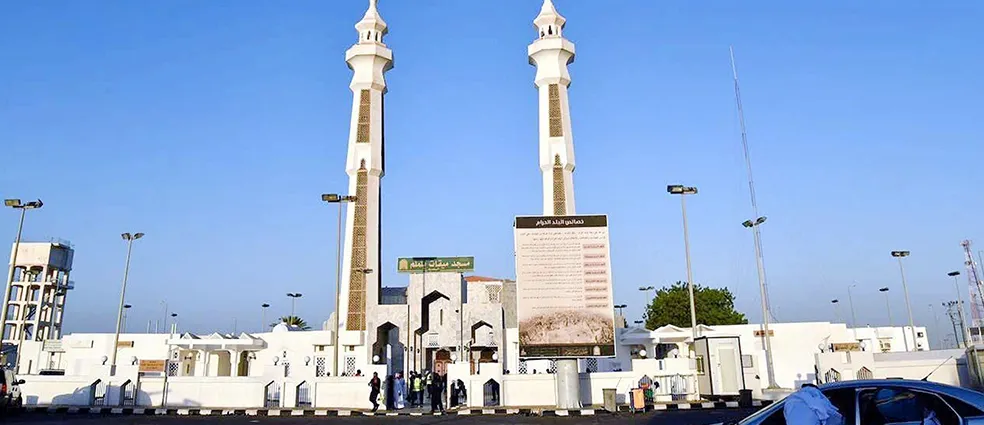
As Saylul Kabeer is the common name for this Miqat. It is 75 km from Makkah. In addition, it is a Miqat location for pilgrims passing through Taif. Also, this is the Miqat for Najd residents and visitors from the United Arab Emirates, Oman, Pakistan, Australia, Malaysia, and Singapore. Moreover, you can reach the highest peak, Wadde Muhrim, through the taif route.
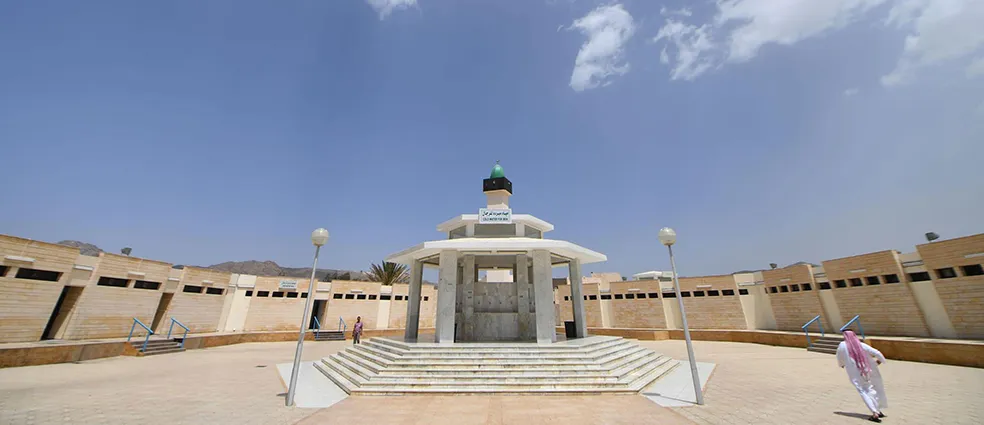
Dhat Irq, located about 90 km to the northeast of Mecca, is the appointed Miqat point. This site serves as the Miqat for those journeying from countries including, but not limited to, Iraq, Iran, China, Russia, and others on their way to perform Hajj and Umrah. Significantly, it is an authentic historical Miqat.
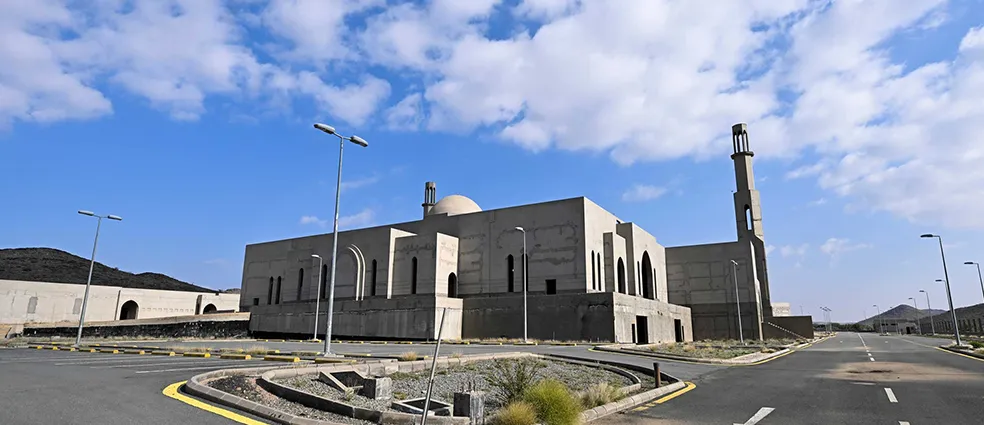
The Miqat boundary is where pilgrims intending to perform the Hajj or Umrah pilgrimage must enter the state of Ihram before crossing into it. This involves performing ritual cleaning and wearing prescribed clothing. There are five Miqats around Mecca. The other one was established by the Prophet Muhammad, PBUH and the other one by Hazrat Umar during his caliphate. Travelling from outside these boundaries to Mecca without observing Miqat is considered a violation. To avoid any difficulty, use GPS or a Miqat map to know your destination. Some famous search items include "Miqat map" and "Miqat boundary map".
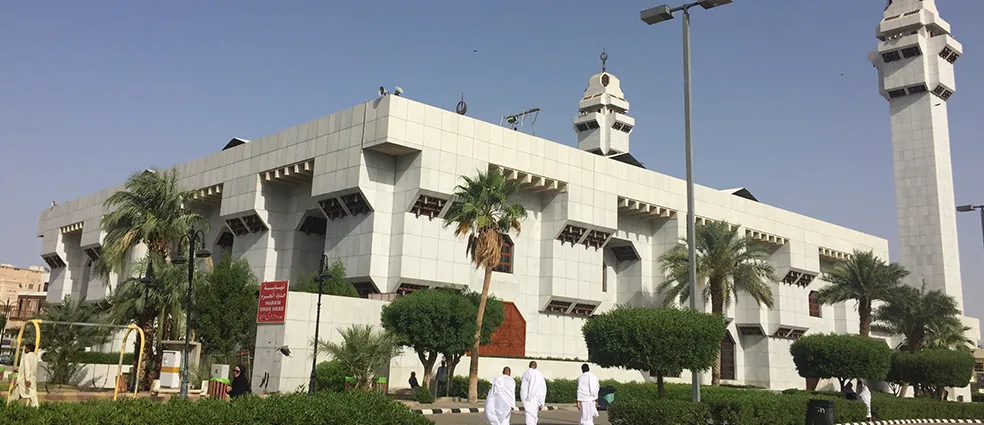
Masjid e Aisha is also a Miqat point. For pilgrims travelling from Madina to Mecca, it is one of the most famous Miqats. Also, it is the nearest Miqat to Makkah. It is recognised across Islamic jurisprudence as (Hanafi, Shafi'i, Maliki, Hanbali) and also known as Dhul Hulaifah. Some famous facilities at Masjid e Ayesha include the Ablution area, prayer halls, and shops selling Ihram garments. To avoid crowding, arrive early at Masjid e Aisha. Make an intention and wear Ihram at Masjid Aisha.
Following the rules at Miqat is essential for entering the divine state of Ihram. First, perform a full-body bath and follow up with personal hygiene, such as nail trimming and removing unwanted hair. Men wear two two-piece white garments: the one is called an izar, and the other is a Rida. Adhering to the proper rules of Ihram is a fundamental part of the pilgrimage. The izar is folded around the waist, and the rida takes over the upper body. Women wear simple, modest clothing that covers the entire body except the face and hands. This includes observing specific guidelines and prohibitions that apply during Ihram. Then, pilgrims perform two rakats nafil before making the intention. At the Miqat, pilgrims recite Talbiyah: "at your service, Allah at your service. At your service, you have no partner, at your service. Truly, all praise, favour and sovereignty are yours. You have no partner"
You have two options when you miss the Miqat: you can go back to Miqat to enter the state of Ihram, or you can slaughter the animal and distribute its meat to the poor people. If you miss it unintentionally, you can return to the Miqat and put on Ihram; there is no penalty for this. The failure to perform the Miqat or perform a haram at the right time may compromise the virtue of the Hajj or Umrah. It is essential to know the Miqat and when you are going on pilgrimage.
| Miqat Point | Nearest City | Distance to Makkah | Notes |
| Dhul Hulaifah / Masjid Aisha | Madinah | 450 km | Most popular for Madinah pilgrims |
| Juhfah / Rabigh | Jeddah | 190 km | Ideal for Egypt & North Africa pilgrims |
| Qarn al-Manazil | Najd | 95 km | Central Arabia pilgrims |
| Yalamlam | Taif | 100 km | Southern pilgrims |
| Dhat Irq | Eastern Saudi Arabia | 600 km | Eastern region pilgrims |
Dhul Hulayfah is located near Medina and is 410-450 km from Mecca. It serves pilgrims arriving from Madina, North America, and Europe. Rabigh, Al Juhfah, is located in the Northwest of Mecca. The distance of this Miqat from Mecca is 179-190 km. It is for Syrian, Egyptian, Jordanian, and North African pilgrims. Qarn Al Manazil is located in the east of Mecca, near Taif. 80 to 90 km away from Makkah. Pilgrims from the UAE, Oman, Pakistan, Malaysia and Najd use this Miqat. The fourth Miqat is Dhat Irq, located in the North East of Mecca and 90-110 km from Makkah. Iran, Iraq, China, and Russia pilgrims used this Miqat. The last Miqat is Yalamlam, located in the South of Makkah, and 100 to 105 km away from Makkah. This Miqat serves pilgrims arriving from Yemen, South Africa, Nigeria and India.
For a smooth, hassle-free Miqat experience, plan your route first. Know about your Miqat point in advance. To avoid Rush and crowds during peak seasons, try to arrive early. Must carry the main items with you, such as Ihram, water, a prayer mat, and light snacks. Use maps or apps for location guidance. Stay calm and relax and focus on your divine preparation, not just the journey.
Knowledge of Miqat and its meaning is an essential aspect of the planning of a Hajj or Umrah visit. It doesn't only represent the geographical limits of the pilgrimage, but also preconditions the spiritual journey that will be undertaken. By this means, pilgrims who attend the Miqat with good intentions and a spirit of devotion will be able to ensure a significant and meaningful pilgrimage experience.
Miqat is not only a location; it is a reminder of the sacred and solemn nature of the pilgrimage. In this process, pilgrims will be able to focus on spiritual renewal and personal transformation, making their Hajj or Umrah trip a very meaningful experience.
There are five major Miqat points, each designated for pilgrims coming from different regions.
Jeddah airport is near Juhfah Miqat, so pilgrims blind from outside Saudi Arabia can observe Ihram before leaving the airport or on the plane.
If a pilgrim enters Mecca without observing Miqat, they must offer a penalty.
Yes. Women can enter the Ihram with the guidance of a mahram or group leader.
Yes. Pilgrims can wear Ihram while travelling in a car, bus, or plane before crossing the Miqat boundary.
 SVG.svg)
Makkah Travel is here to help you visit religious places.

 Arrow SVG.svg)
 SVG.svg)