
Taraweeh is a beautiful gift of the holy month of Ramadan. This is a highly rewarding act of worship that enables you to make the most of the blessed nights of the blessed month. It gives you an incredible opportunity to reflect, worship, and grow spiritually with your fellow Muslim brothers and sisters. Muslims seek complete duas to recite during and after the Taraweeh prayer to ensurethey make the most of this incredible divine gift.
The night prayer, Taraweeh, is the most cherished nightly act of worship. You must perform it after the Isha prayer during the sacred month of Ramadan. During this prayer, Muslims stand together, listen to the Holy Quran, and make duas. What can be more spiritually uplifting than this? However, this also makes many people curious about the duas to recite during Taraweeh and whether they can recite their personal Ramadan duas and supplications during this time. If you have any questions or confusion about the Taraweeh prayer, you have come to the right place. We are here with a detailed guide on the Taraweeh prayer, the duas to recite, and when to recite them.
Taraweeh is a Ramadan-exclusive night prayer. It is Sunnah Mu’akkadah, which means that it is not fard but is an emphasized Sunnah. This prayer is offered in multiple sets of two rakaats. There are also breaks in between, which give the worshippers time to rest; they also utilise this time, preferring to recite duas and supplications for extra rewards.
Taraweeh duas can be recited during this act of worship. Whether you want to recite these duas in the breaks or after every four rakaat or after finishing the entire Taraweeh prayer is completely up to you.
Also, it is important to keep in mind that there is no fixed or prescribed dua to recite during Taraweeh in both the Quran and the Hadith. This gives you the freedom and flexibility to recite whatever supplications you want to recite and even make your personal duas. You can recite any supplications from the Quran and Hadith during Taraweeh for additional rewards and blessings.
Dua is one of the most powerful tool for Muslims that connect them to the Creator. Not only that, but this is also the essence of every act of worship. From offering Namaz to fasting and going on a pilgrimage, every act of worship consists of duas and supplications to gain endless blessings in this world and in the life hereafter. Therefore, like every other act of worship, dua is essential for Taraweeh too. Prophet Muhammad (SAW) said:
“Whoever stands in prayer during Ramadan with faith and seeking reward, all of his previous sins will be forgiven.”
(Bukhari & Muslim)
This means that as you stand in prayer in the nights of Ramadan, you can ask for anything you want. Make your duas about forgiveness and blessings from the Almighty, and everything else will follow.
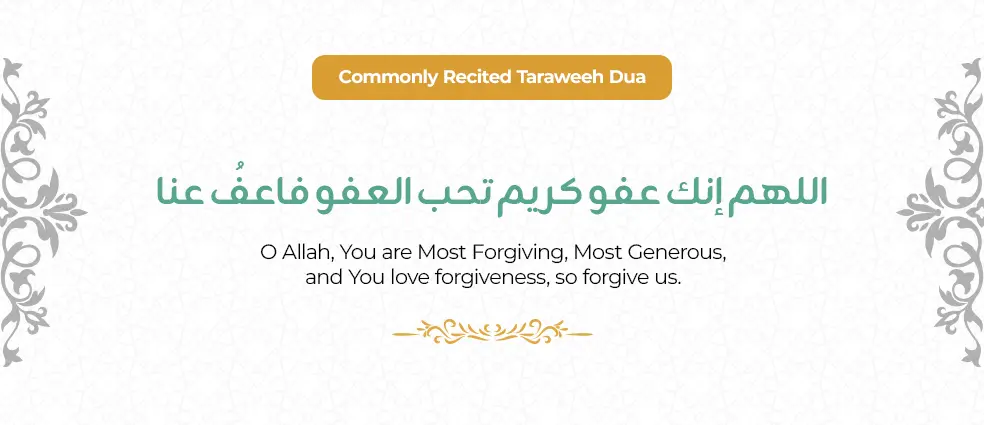
As we have already mentioned, there are no specified duas to recite during Taraweeh. But some duas are recited more often than the others in various mosques across the world. Here is a dua that many mosques recite while conducting the night prayers in Ramadan.
Arabic:
اللهم إنك عفو كريم تحب العفو فاعفُ عنا
Transliteration:
Allahumma innaka ‘afuwwun kareemun tuhibbul ‘afwa fa‘fu ‘anna
English Translation:
O Allah, You are Most Forgiving, Most Generous, and You love forgiveness, so forgive us.
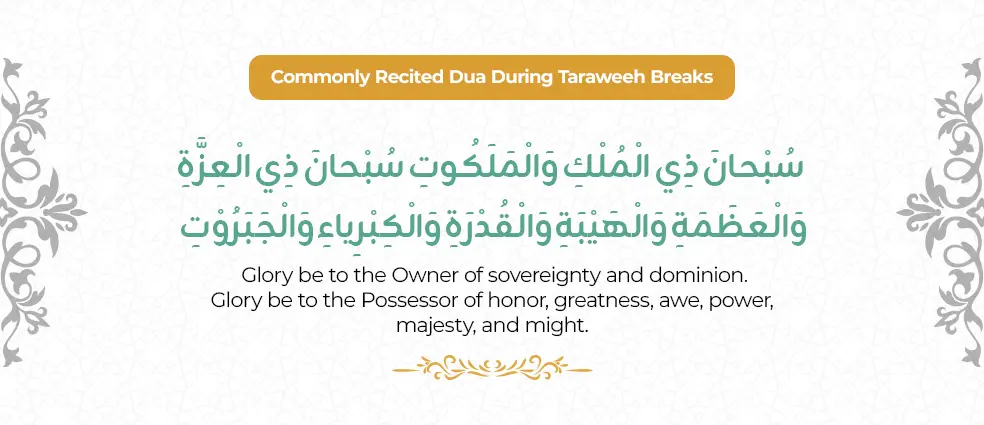
There are short breaks during Taraweeh. These breaks are given to the believers so that they can regain their strength. But reciting duas during this time is also highly significant. One of the most commonly recited duas during the Taraweeh breaks is listed below.
Arabic:
سُبْحَانَ ذِي الْمُلْكِ وَالْمَلَكُوتِ
سُبْحَانَ ذِي الْعِزَّةِ وَالْعَظَمَةِ وَالْهَيْبَةِ وَالْقُدْرَةِ وَالْكِبْرِيَاءِ وَالْجَبَرُوتِ
English Translation:
Glory be to the Owner of sovereignty and dominion. Glory be to the Possessor of honor, greatness, awe, power, majesty, and might.
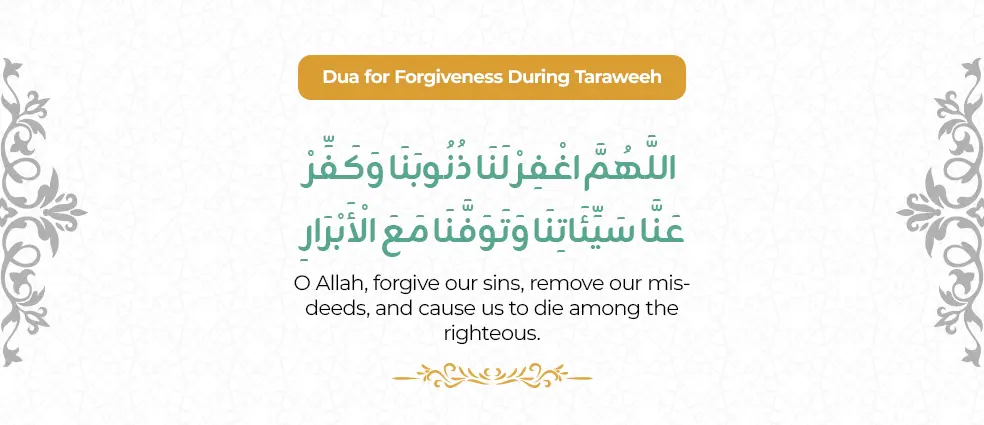
Ramadan is one of the most blessed months in Islam. With the blessings of this month, the doors of forgiveness open for the believers. Therefore, every Muslim tries to ensure that all their sins are forgiven during this month. Reciting Istigfar and other duas for forgiveness is highly recommended during Ramadan. You can also recite duas for forgiveness during Taraweeh. Here is a dua that you can recite.
Arabic:
اللَّهُمَّ اغْفِرْ لَنَا ذُنُوبَنَا وَكَفِّرْ عَنَّا سَيِّئَاتِنَا وَتَوَفَّنَا مَعَ الْأَبْرَارِ
English Translation:
O Allah, forgive our sins, remove our misdeeds, and cause us to die among the righteous.
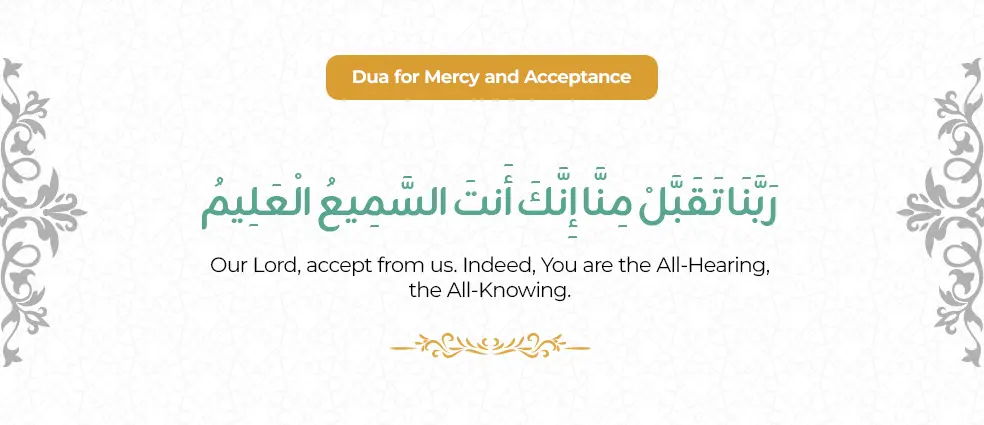
A believer never stops asking for the mercy of the Almighty and the acceptance of all their acts of worship. During Taraweeh in Ramadan, you have the opportunity to make dua for mercy and acceptance, as many people feel closer to the Almighty during this blessed month. Also, as Muslims, we believe that all our duas will be answered during Ramadan if we ask sincerely and with pure intentions.
Arabic:
رَبَّنَا تَقَبَّلْ مِنَّا إِنَّكَ أَنتَ السَّمِيعُ الْعَلِيمُ
English Translation:
Our Lord, accept from us. Indeed, You are the All-Hearing, the All-Knowing.
There is no language restriction in Islam. Islam encourages believers to ask the Almighty in whichever language they want and are comfortable in, and the Creator of this universe will listen to them. You may recite any sincere dua in your own language, such as:
“O Allah, forgive our sins, accept our prayers, grant us guidance, and make us among those who benefit from Ramadan.”
You just have to recite duas and supplications in Arabic when they are specified in various acts of worship, like Salah, or while reciting the Holy Quran.
As you complete your Taraweeh, you can recite various duas. Here are some of the duas that you can recite after completing your Taraweeh.
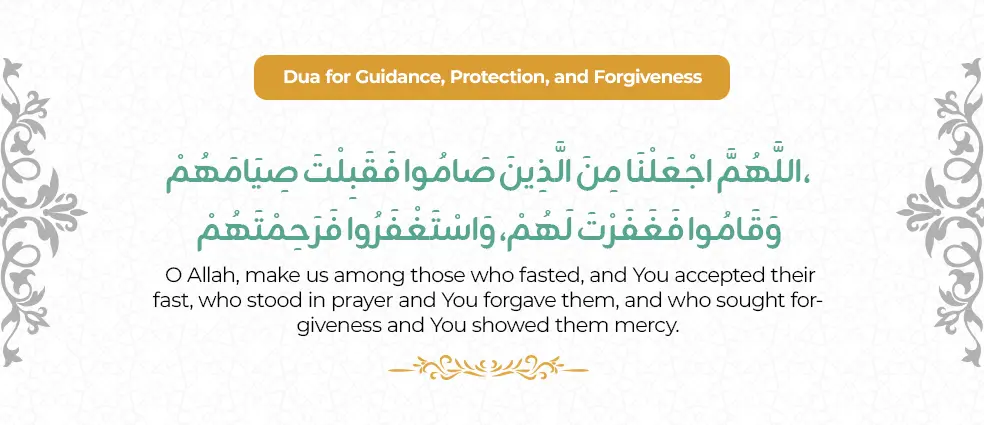
Arabic:
اللَّهُمَّ اجْعَلْنَا مِنَ الَّذِينَ صَامُوا فَقَبِلْتَ صِيَامَهُمْ، وَقَامُوا فَغَفَرْتَ لَهُمْ، وَاسْتَغْفَرُوا فَرَحِمْتَهُمْ
English Translation:
O Allah, make us among those who fasted, and You accepted their fast, who stood in prayer and You forgave them, and who sought forgiveness and You showed them mercy.
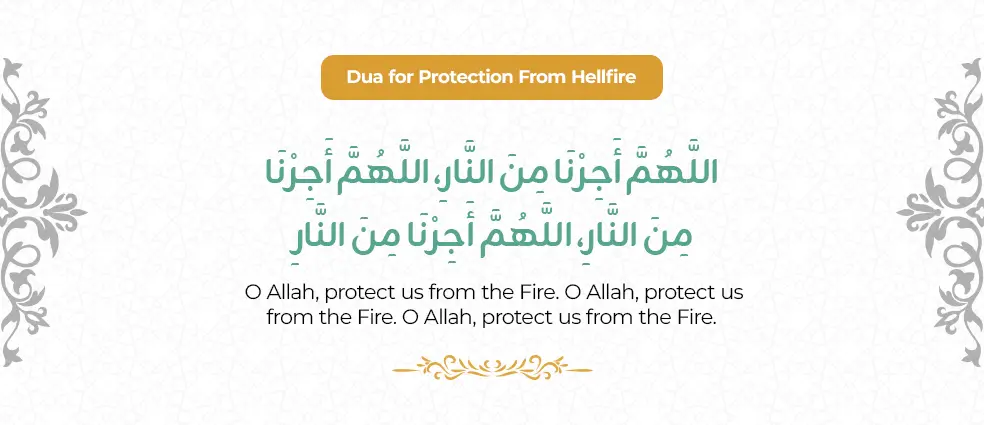
Arabic:
اللَّهُمَّ أَجِرْنَا مِنَ النَّارِ، اللَّهُمَّ أَجِرْنَا مِنَ النَّارِ، اللَّهُمَّ أَجِرْنَا مِنَ النَّارِ
English Translation:
O Allah, protect us from the Fire. O Allah, protect us from the Fire. O Allah, protect us from the Fire.
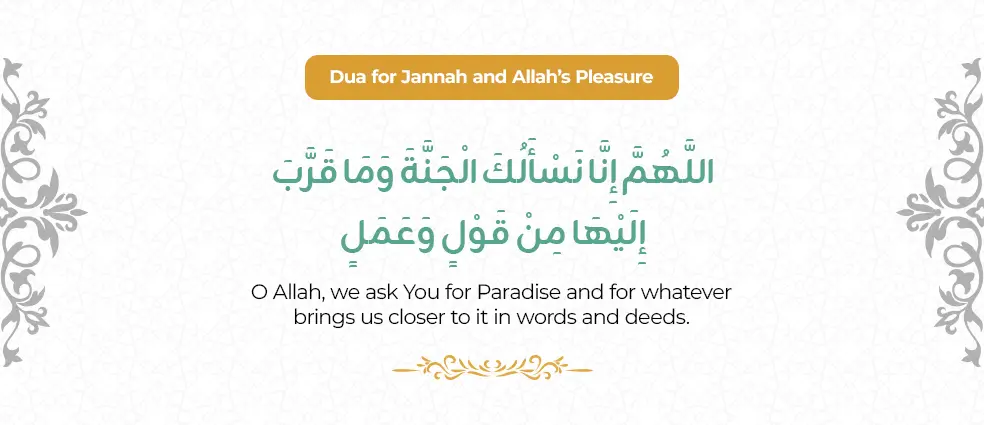
Arabic:
اللَّهُمَّ إِنَّا نَسْأَلُكَ الْجَنَّةَ وَمَا قَرَّبَ إِلَيْهَا مِنْ قَوْلٍ وَعَمَلٍ
English Translation:
O Allah, we ask You for Paradise and for whatever brings us closer to it in words and deeds.
This is one of the most asked questions. And the answer is, of course, you can. There is no restriction on when you can or cannot make duas. This is the right of the believers and the source of conversing with the Creator. You can pour your heart out in front of the Almighty, and He will listen to you.
Use whichever language you want and ask the Almighty for your personal duas, with a firm faith that He will grant your wishes and that He has ultimate power over everything in this universe. As you finish your Taraweeh prayer, ask for the following things in your duas.
There is no Sunnah that dictates whether you should make duas during the Taraweeh rakats or which duas you should recite. You can complete freedom to recite and make whichever duas you want. You just have to keep in mind that performing acts of worship in the blessed nights of Ramadan is highly rewarding, and this is the month when the Almighty listens to the desires of the hearts of the believers.
Making duas and reciting supplications is always encouraged, whether you are offering Taraweeh prayers or not. You can make duas to connect with the Creator and fill your life with blessings through the spiritual essence of Ramadan. But if you don’t want to recite any duas during Taraweeh rakats, it is completely okay too. You can use this time to reflect, make dhikr, or simply observe silence for a while. There are no restrictions on anything as long as you are respectful and do not disturb other worshippers.
If you offer Taraweeh prayer every Ramadan, you might have noticed that most mosques recite the same supplication after every four rakat of Taraweeh. Even though it is permissible and is done to gain additional rewards, it is not an obligatory act of worship. It is neither mandatory nor Sunnah Muakkadah.
Scholars agree that you can make any duas and recite supplications of your choice during Taraweeh as long as they don’t contradict the Islamic teachings. So, don't worry about whether there are any fixed duas. Just try to recite whatever supplication you want with a pure intention, and Inshallah you will get the rewards.
You can never go wrong with making sincere duas. Just make the dua with a pure intention and with firm belief that Allah Almighty is listening to it and will grant you whatever your heart desires. But still, if you need some tips for making dua during Taraweeh, we have got you covered.
There are many misconceptions about Taraweeh duas, and we are clear to clear them all. As Ramadan approaches and you prepare for Taraweeh, understand the following misconceptions and address them to make the most of this incredible opportunity to get closer to Allah Almighty.
You can make duas whenever your heart desires. But some times are more beneficial and highly rewarding than others. Some of the best times to make dua during Taraweeh are listed below.
One thing that you must keep in mind is that instead of dwelling on the right time to make duas, focus on sincerity and consistency. These are the qualities that will ensure all your duas are accepted, regardless of when you make them.
Taraweeh is not just a prayer you offer, but it is also a matter of counting the rakats and making it compulsory on yourself to perform it even when your mind is not focused. This act of worship is all about sincerity. Taraweeh is not obligatory, but this is a great way to make the most of the highly blessed nights of Ramadan.
This prayer is all about standing in front of the Almighty with sincerity and a firm faith that whatever you ask will be granted, and you will get extensive rewards for this prayer. You can add heartfelt duas and supplications in this prayer to make it much more rewarding and transformative.
There is no fixed dua to recite during Taraweeh according to the Quran and Sunnah. Any authentic or personal supplication may be recited.
No authentic hadith prescribes a specific Taraweeh dua. But you can recite other duas and supplications from Sunnah and Hadith to make the most of this spiritual experience.
Yes, you can make duas in any language. The use of Arabic in duas is necessary only in formal prayer positions, such as in Salah.
Most mosques conducting Taraweeh prayer recite the dua after every 4 rakats. This makes the worshippers think that this dua might be obligatory, but it is optional.
No, there is no obligation to recite long duas. It is a misconception to think that only long duas are more beneficial and rewarding. You can also make short, sincere duas, which are equally valuable.
 SVG.svg)
Makkah Travel is here to help you visit religious places.

 Arrow SVG.svg)
 SVG.svg)