
When someone comes home after Umrah, the whole house feels different. The air feels softer. People smile more. There is a quiet joy that sits in every corner of the room. Family members start preparing days before the pilgrim returns because welcoming someone from a holy journey feels special in a way that normal words can't explain.
Decorations and gifts are simple ways to show love, respect, and gratitude. They help families express feelings that are sometimes too deep to put into sentences. A thoughtful gift or a warm decoration says we are happy you came home safe, and we share your blessing.
This guide walks families through everything they look for: decorations, small gifts, hampers, welcome ideas, cards, and even cake suggestions.
Umrah is not an ordinary journey. It is a sacred act of worship, a spiritual pilgrimage that brings a believer closer to Allah. The meaning of Umrah goes beyond travel — it is a heartfelt journey of devotion, reflection, and purification People go with a clean heart, they make dua, they walk in holy places, and they come back with a sense of peace. So when they return, families want the home to show that emotion too, often through simple decorations or sharing Umrah Mubarak wishes to welcome them warmly.
Decorations help for a few reasons.
Many families say the decorations remind them of the blessing of the whole journey, not just the travel itself. A welcome banner or simple lights show that the family is grateful for the safe return.
Another reason is emotional. When a pilgrim walks through the door and sees a decorated space, the tiredness from travel fades a little. It makes them feel appreciated and loved. It gives them a warm moment after days of worship and walking.
People get creative, but some decorations appear in almost every home because they always work.
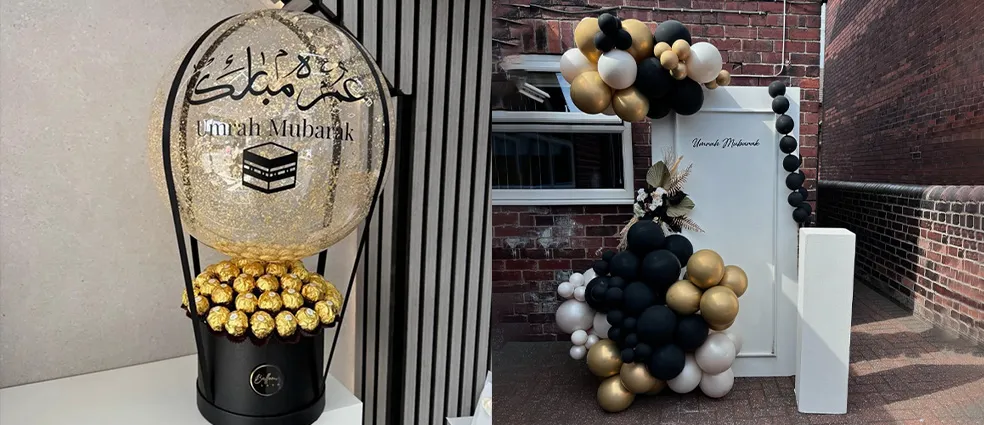
These balloons usually come in gold, black or white. Many have Islamic patterns or Kaaba-inspired designs. Balloons make the room feel cheerful right away. Kids enjoy them, and adults feel the celebration as soon as they see them.
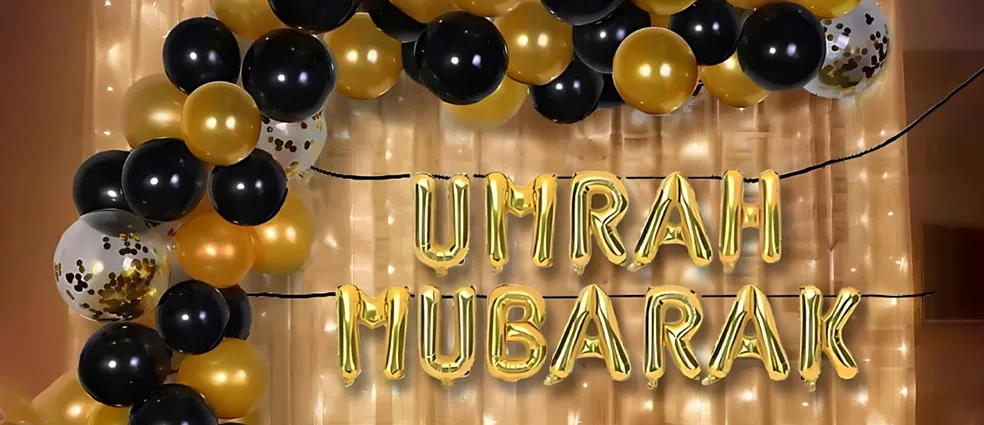
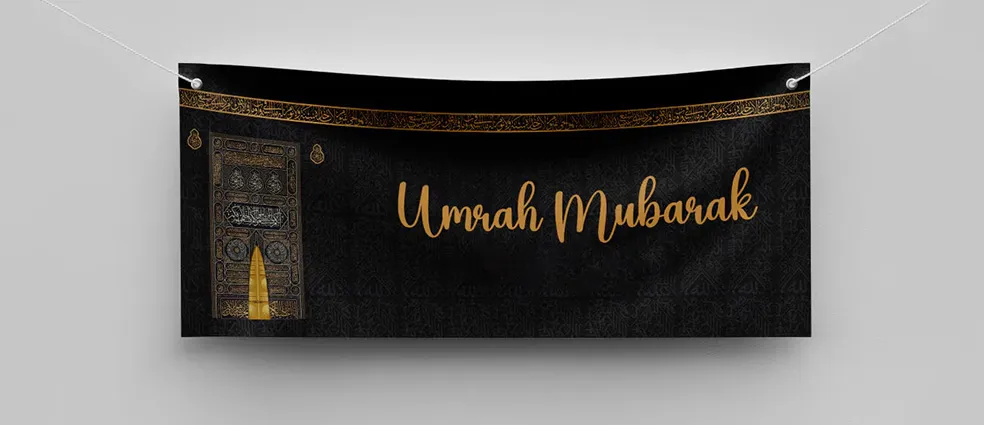
Banners are usually the first thing people notice when they walk in. They sit at the entrance or behind a table. A simple Umrah Mubarak banner sets the tone for the evening. It tells guests exactly what the gathering is about.
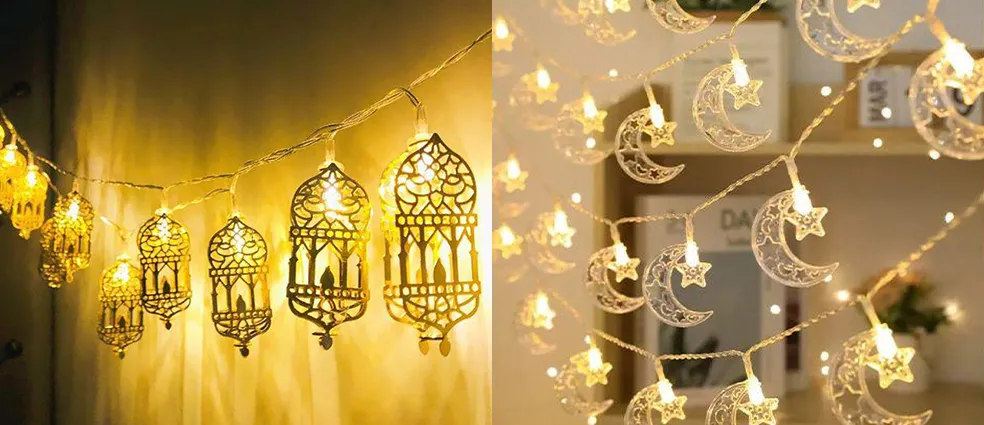
Fairy lights always add warmth. They make the home glow softly. When the lights reflect on metallic decorations or balloons, the whole room looks more festive. Even a small set of lights can completely change the mood.
Families often prepare a small table with dates, Zamzam water, and sweets. Sometimes they include prayer beads, small Qurans, or items of Islamic calligraphy. Decorative trays add a bit of charm, but the meaning of the items matters more than how fancy the table looks.
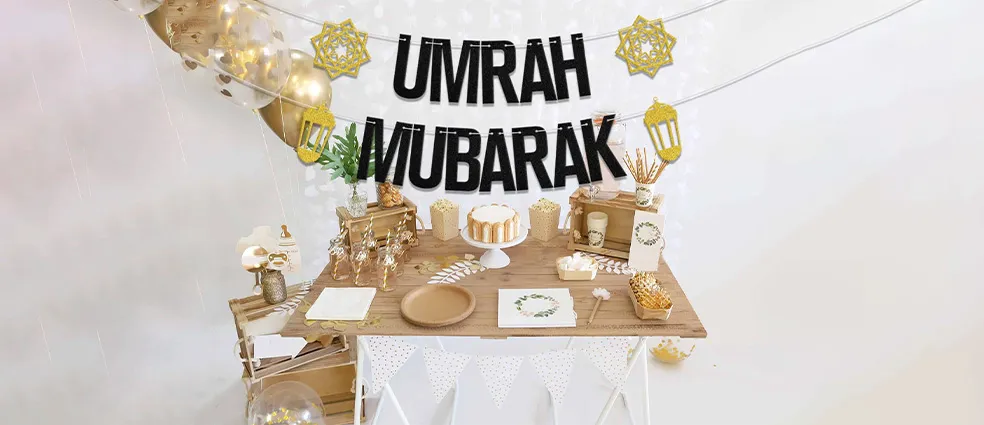
Many families now mix tradition with newer styles.
Some choose custom backdrops that look like the Kaaba or Masjid al Nabawi. These backdrops create a nice photo area. Guests can take pictures with the pilgrim, so the memory stays.
Photo booth corners are also becoming common. People put props like mini ihram designs, small lanterns or signs with duas. It keeps the gathering fun and interactive.
Printed keepsakes also help families remember the event. These can be posters with duas, framed pictures of Makkah or Madinah, or printed quotes. They stay in the home long after the celebration ends.
Families say they feel better about using items they can store and reuse.
Gifts carry meaning. They don't have to be expensive. They only need to be thoughtful and respectful. Here are some gift ideas that people love giving and receiving.
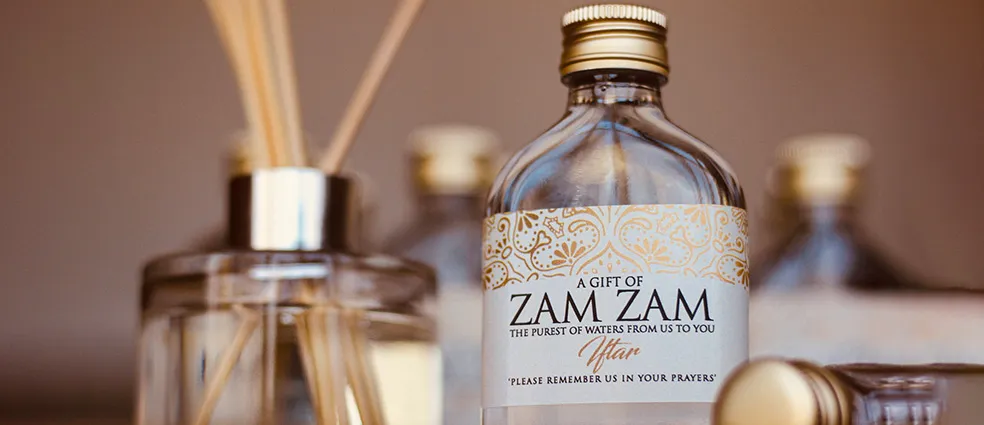
Zamzam water is considered blessed. Giving it as a gift shows care and spiritual intention. People usually keep it for special duas or moments.
These dates come from Madinah and are known for their taste and significance. They make a classic gift. Many families like using gift boxes to make the dates look more special.
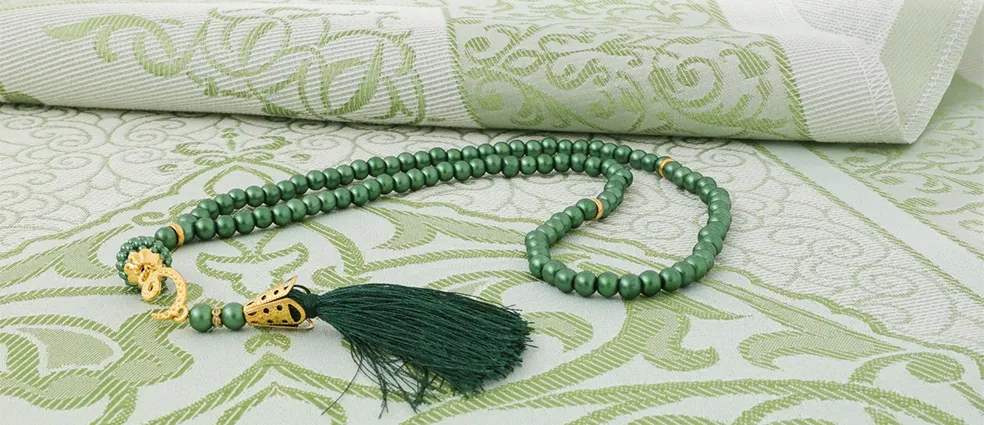
Simple, practical, and meaningful. A new prayer mat can remind the person of their Umrah journey. Tasbih beads help with dhikr and make the gift more complete.
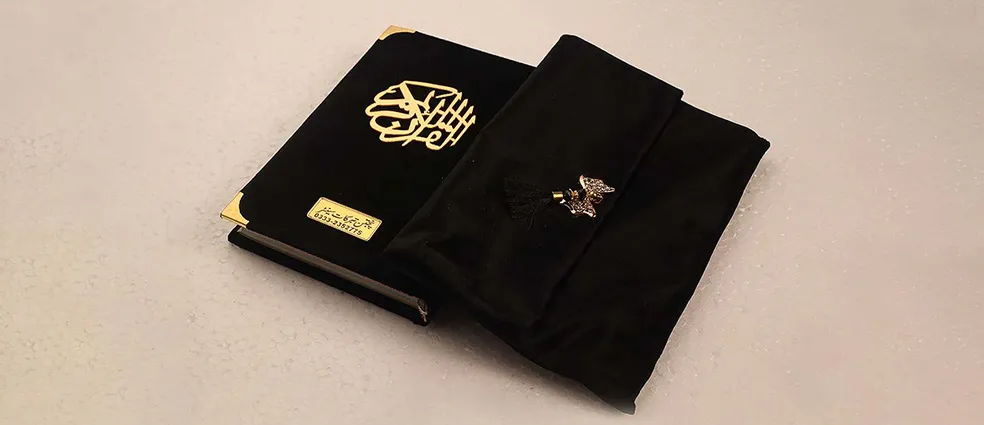
Books bring constant benefit. A Quran, a hadith book, or a dua book can support a person's spiritual life long after the celebration. When giving a Quran, families often pick a beautiful cover or a personalised version.
Newer options are becoming popular because they add a personal element.
People like mixing traditional and modern items to create balanced gift sets.
Small gifts still carry emotion. Sometimes the simplest thing gets the warmest reaction.
Here are a few ideas:
The message behind the gift matters more than the size or price.
Families hosting an Umrah Mubarak gathering often prepare small favours to hand out.
Many guests keep these items as reminders of the evening.
Planning makes everything easier. Picking a theme first helps guide the rest of the preparations. Once the theme is set, choosing decorations feels easier.
It helps to divide the work. One person hangs lights, one arranges the table, and another prepares the gifts. Keeping things simple is usually the most innovative approach.
Good planning removes stress and keeps the celebration peaceful for everyone.
Here are the top gifts you can give out to your fellows.
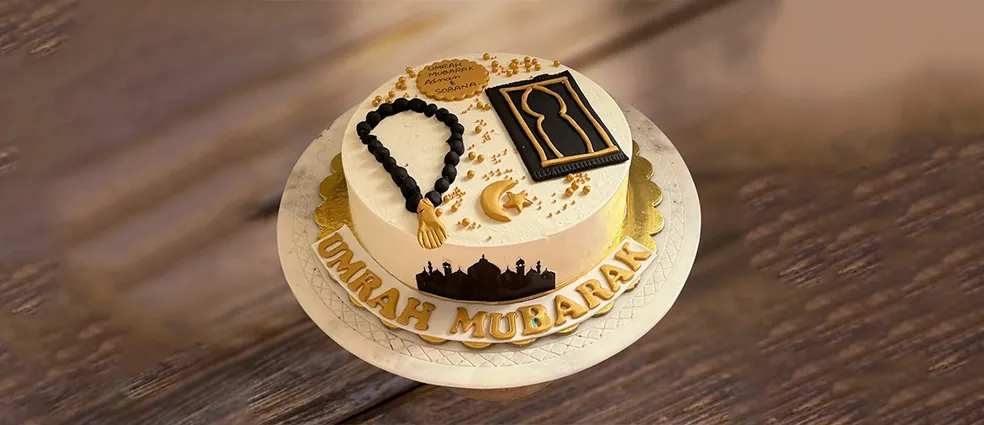
A cake makes the whole thing feel nicer. It doesn't have to be fancy. Families sometimes order an Umrah-themed one, but plenty of people just put out whatever sweets they have, like chocolate-covered dates, a few cookies, maybe some pastries from the shop down the road.
A card may seem simple, but a handwritten message can be more emotional than any expensive gift. Add a small dua, write a line from the heart, and pair it with flowers if you want to elevate it.
This is an excellent gift for someone preparing to leave. These bags usually carry a tasbih, water bottle, notebook, dua cards, and sometimes a prayer mat. It keeps everything organised during travel.
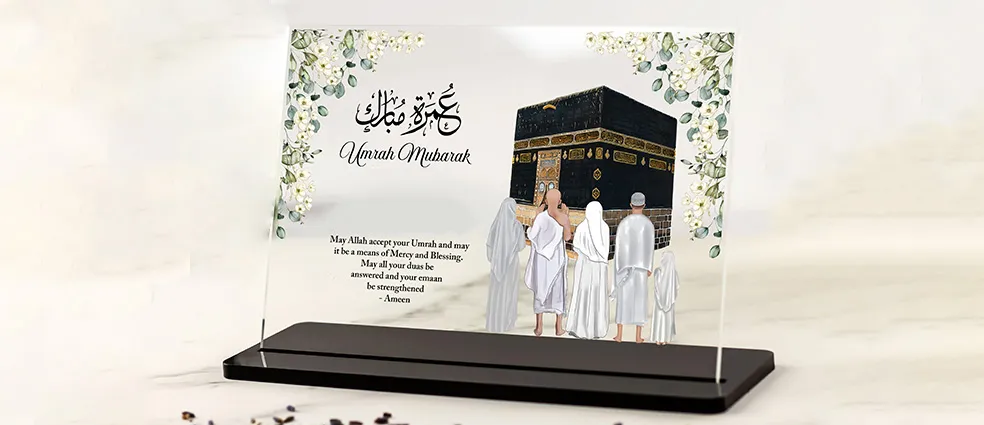
As mentioned above, this includes frames, mugs, 3D displays, and name-engraved items. They stay in the home long after the celebration, serving as keepsakes that hold memories of the journey.
Hampers allow you to combine multiple items. Prayer mats, Qurans, journals, dates, perfumes, you know, everything that fits neatly into one elegant box.
This could be a hijab box, an abaya, perfume, a prayer set, or a personalised journal. These items make the gift feel warm and thoughtful.
Men often appreciate attar (itr) perfumes, prayer mats, thobes, and Arabic dial watches. These gifts feel meaningful and practical.
Children love gifts that feel fun but still connect them to their faith. Interactive prayer mats, Quran cube pillows, illustrated Qurans, or star projectors make excellent presents.
This soft pillow plays duas and nasheeds. Kids use it during bedtime, and it brings a sense of calm to their space.
A colouring prayer mat makes salah engaging for children. It teaches them about prayer in a hands-on, enjoyable way.
This projector calms little ones at night with soft lights and recitations. It's beneficial for young kids who struggle to sleep.
Frames with duas or Kaaba designs make beautiful, meaningful home décor.
When someone comes back from Umrah, people don't think about decorations first. Families are mostly thinking about the person who was away, the long flights, the tiredness, andthe prayers they made. The balloons and lights only show up because everyone wants the house to look a little happier. Many families also start planning future trips through trusted services like Makkah Travel or explore different umrah packages as they think about their next spiritual journey.
Sometimes the decorations aren't even planned well. Someone puts a banner too high, someone sticks a balloon where it doesn't match, and nobody fixes it because the point isn't perfection. The house already feels different the moment the pilgrim walks in.
The gifts people give are simple things. Zamzam water. A small box of Dates, tasbih. A Quran. These are everyday items in a Muslim home, so they don't feel like "special event" gifts. But that's precisely why they matter. They get used. They stay on shelves. Someone picks them up weeks later and remembers the Umrah trip again.
You don't need a grand welcome. Most people don't do anything fancy: a small table, some sweets, maybe a few relatives waiting near the door. That's normal. And honestly, it feels more genuine.
The real meaning is in the intention. A quiet thankfulness, relief. A bit of pride and a lot of love. Families celebrate because the person came home safe, and that alone makes the moment worth marking, even if everything else is simple.
Not necessary, but they help create a warm environment. Even one banner or a few lights make the house feel ready. It's more about the atmosphere than the quantity of décor.
A simple setup works—dates, Zamzam, a few sweets, maybe a small Islamic decoration piece. Many families add prayer beads or a framed dua, but that's optional. The idea is to create a peaceful corner, not a grand display.
Anything unrelated to the spirit of Umrah or unnecessarily flashy. Gifts that lean too much toward materialism or don't have any connection to deen usually feel out of place. It's better to choose something small but meaningful.
Yes, especially for people who prefer audio recitations or have trouble reading small text. A digital Quran can be helpful for elders and great for children learning to recite.
Kids love gifts that make worship feel fun. A colourful prayer mat, a Quran cube pillow, or an illustrated dua book usually captures their interest.
Anything elegant and straightforward. Many families choose white or gold designs with Umrah Mubarak written on top. Some prefer date-flavoured desserts to stay in line with the theme.
There is no rule, but neat wrapping always adds charm. Gold, white, and black gift wraps tend to match the Umrah theme. A simple ribbon or a small dua tag completes the gift with minimal effort.
Absolutely. Teenagers usually pick practical gifts, such as a tasbih, a small Quran speaker, or a personalised mug. These are simple to give and still carry meaning. It also teaches them how to express love and respect in spiritual moments.
Some families do this as a gesture of sharing blessings. Small Zamzam bottles, dates from Madinah, or little tasbihs are standard. It is not required, but many see it as a nice way to extend the journey's reward.
 SVG.svg)
Makkah Travel is here to help you visit religious places.

 Arrow SVG.svg)
 SVG.svg)