
To begin with, congratulations on embracing the journey of peace and faith in Islam. It is a very purposeful religion where you can find instances of building a connection to Allah. One such beautiful act is the Umrah journey. You can enjoy this spiritual journey and embrace the path of ultimate spirituality. Pilgrims go through emotional and spiritual rebirth and liberate themselves from worldly distractions by honest Umrah duas and true devotion. By increasing their faith, these duas for Umrah help individuals seek pardon, guidance, and peace.
Often called Umrah, it is a religious, humanitarian, and recreational trip. Muslims bound for Makkah depend on duas for Umrah that begin with the intention and continue through Tawaf and Sa'i. Said in Arabic, these supplications instruct travellers on how to perform Umrah while fostering humility before Allah. Learning Umrah duas step by step ensures that every activity adheres to the Sunnah and strengthens the spiritual effect of the travel.
Performing the journey with full historical knowledge is much more meaningful. Along with learning the rituals and duas, pilgrims should also ensure their travel is arranged properly through trusted Umrah packages that cover flights, accommodation, and local transport in Makkah and Madinah. At every stage, travelling to Makkah, performing Tawaf, and completing Sa'i, personal duas for Umrah play a vital role. These Umrah step-by-step with duas act as a source of hope, helping pilgrims seek Allah's assistance and acceptance throughout the pilgrimage.
Understanding duas to make during Umrah helps pilgrims perform each ritual with confidence and devotion. To be cognizant of the duas related to the various stages of Umrah, one will not only be able to complete all these steps with ease, but the Umrah experience will also be religiously meaningful, as all actions will occur according to Sunnah.
Arabic: لَبَّيْكَ اللَّهُمَّ عُمْرَةً
English Meaning: "O Allah, here I am to perform Umrah."
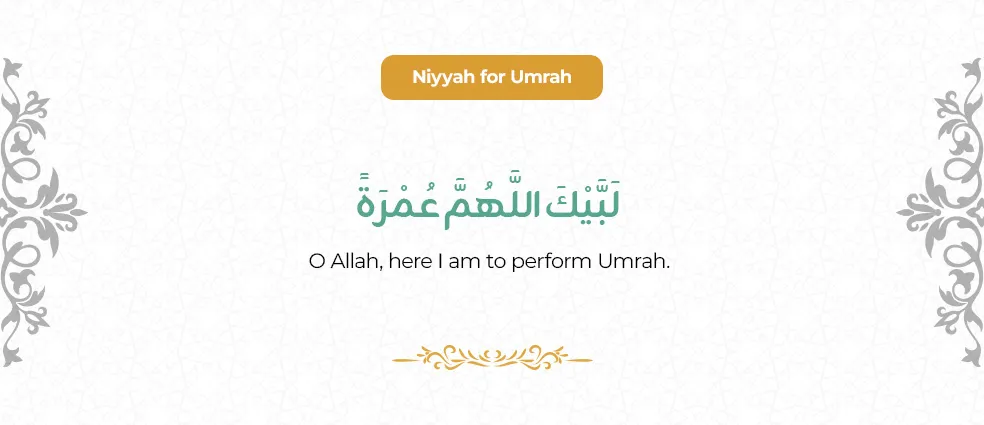
Now, the intention of the heart before entering the spiritual world of Ihram is that of Umrah, and that is referred to as "niyyah of Umrah." After that, when one says "Labbayk Allahumma' Umrah," one is all set to meet the order of Allah and go through the whole process simply because of His pleasure. Henceforth, that is also the point when the spiritual journey of an Umrah performer starts, because at that stage, one not only is going to have a trip at the physical level, but one also goes through the spiritual journey of humbleness, submissiveness, and love in consideration of all those spiritual deeds and actions that are to be performed. These duas to read during Umrah symbolise humility, obedience, and love for Allah, and initiate both a physical and a spiritual transformation.
After Niyyah, pilgrims begin reciting the Talbiyah, one of the most essential Umrah duas in English and Arabic, until reaching Masjid al-Haram.
Arabic: لَبَّيْكَ اللَّهُمَّ لَبَّيْكَ، لَبَّيْكَ لَا شَرِيكَ لَكَ لَبَّيْكَ، إِنَّ الْحَمْدَ وَالنِّعْمَةَ لَكَ وَالْمُلْكَ، لَا شَرِيكَ لَكَ
English Meaning: "Here I am, O Allah, here I am. You have no partner, here I am. Truly, all praise, favour, and sovereignty are Yours. You have no partner."
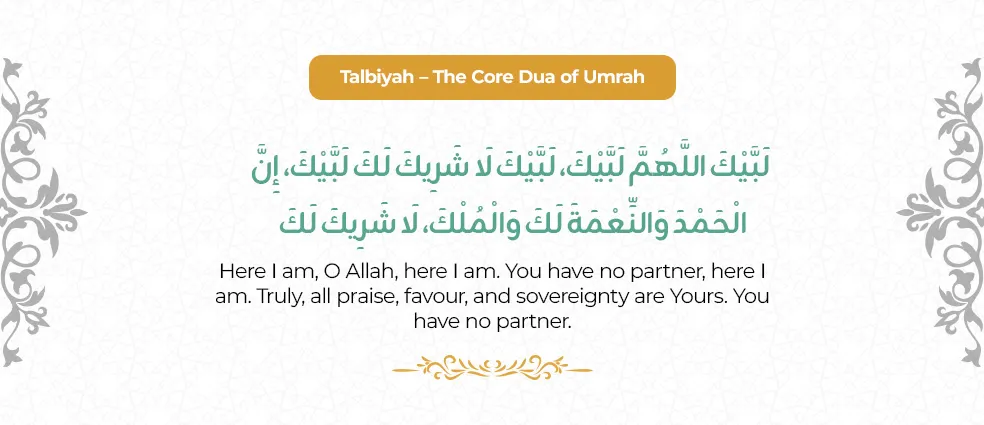
Talbiyah is the implementation of the spirit of Umrah, which represents the total submission of the individual to Allah Himself. Among the most powerful duas to learn for Umrah, it reminds pilgrims to detach from worldly matters and focus solely on worship. It relates that the worshiper accepts the call of the worshipers, which has been allocated to them by Allah, as a way of emphasising their declaration of the oneness, lordship, and favour of Allah. This represents a significant element of worship, enabling Muslims to draw closer to the House of Allah by paying less attention to their worldly business.
Upon entering Masjid al-Haram, pilgrims recite one of the most well-known duas for Umrah:
Arabic: اللَّهُمَّ افْتَحْ لِي أَبْوَابَ رَحْمَتِكَ
English Meaning: "O Allah, open for me the doors of Your mercy."
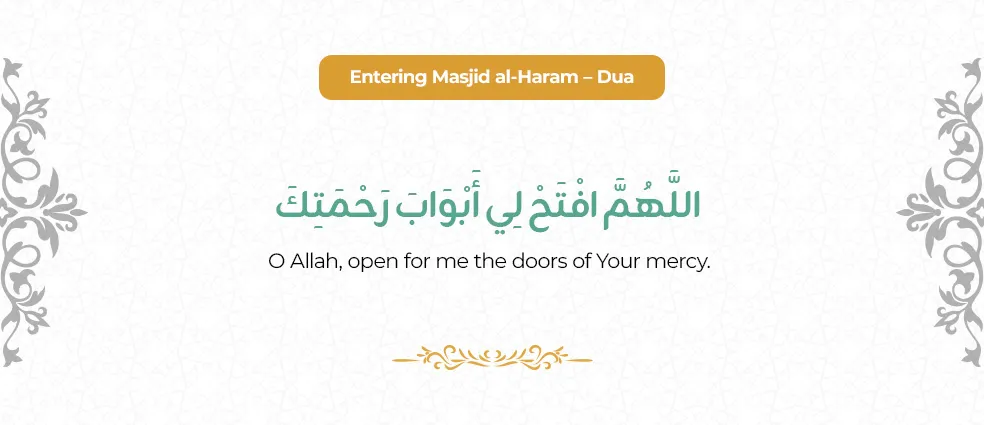
Entering Masjid al-Haram is a pious and emotional phenomenon for all of you. Reciting this dua prepares the heart to enter a place where countless Umrah duas have been accepted throughout history. You will face the House of Allah for the very first time. You will witness an immense amount of feelings and emotions in terms of humiliation, wonder, and bliss. But the purpose behind the composition of this dua, as you enter Masjid Al-Haram, is associated with the Sunnah process. Your dua has been composed in a manner in which you get the opportunity to prepare your heart to face the place where the acceptance of an uncountable number of duas has been witnessed.
You may make the following intention, which is in Arabic:
اَللَّهُمَّ إِنِّي أُرِيدُ طَوَافَ بَيْتِكَ الْحَرَامِ فَيَسِّرْهُ لِي وَتَقَبَّلْهُ مِنِّي
O Allah, I intend to perform Tawaf of your Sacred House, so make it easy for me and accept it from me.
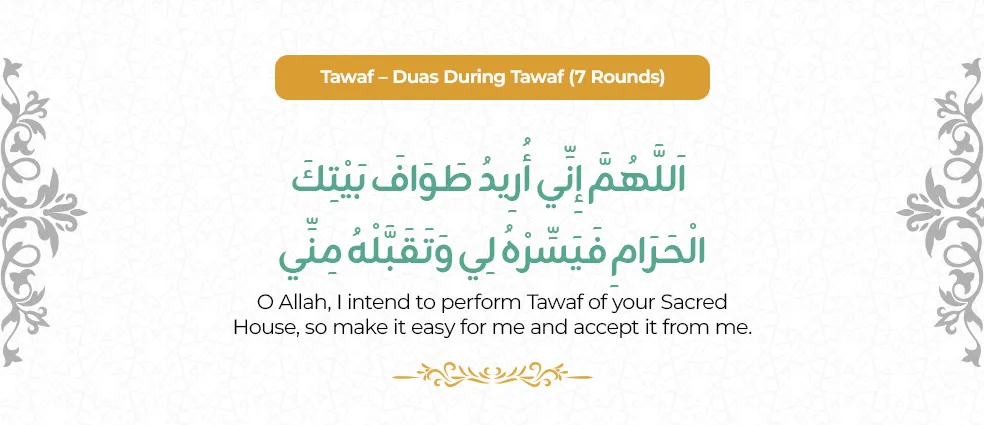
There are no fixed Umrah duas during Tawaf. Pilgrims may recite any authentic supplication, making this time ideal for the best duas for Umrah during and heartfelt communication with Allah.
You may recite:
Concerning Tawaf, it is observed that humility, presence in the heart, and the presence of Allah are the primary dominant elements. These moments allow sincere repentance and supplication, making duas during tawaf especially meaningful. During the era of Tawaf, you can speak freely to your Lord through your heart. This is an incredible opportunity in which your brain is full of zeros, without any defects, and the presence of Allah fills your heart through the desire of your Lord. Here, you are also given the authority to demand apologies for all the mistakes you have committed in life, right guidance in life, proper health, easy life processes, and also for accepting your Umrah.
Arabic: رَبَّنَا آتِنَا فِي الدُّنْيَا حَسَنَةً وَفِي الآخِرَةِ حَسَنَةً وَقِنَا عَذَابَ النَّارِ
English Meaning: "Our Lord, grant us good in this world and good in the Hereafter, and save us from the punishment of the Fire."
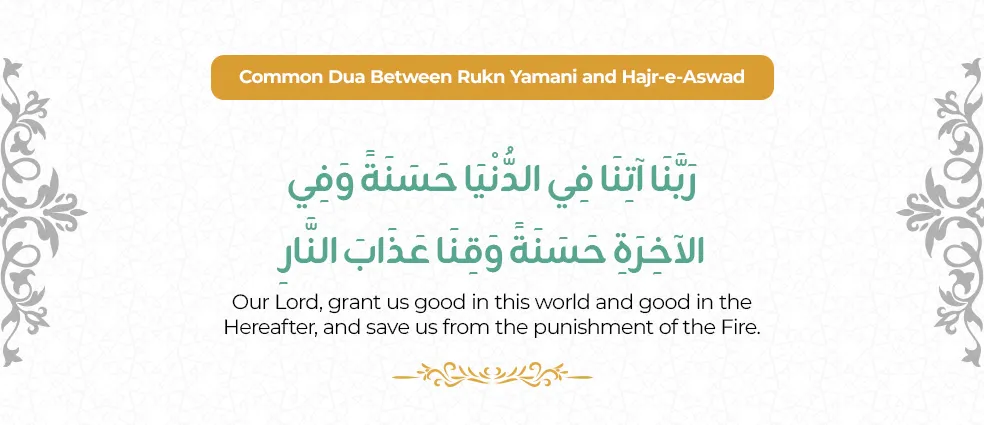
This beautiful and intricate supplication is only quoted as it has to be made within the Sunnah, in the process of performing the Tawaf, by Rukn Yamani and Hajj-e-Aswad. This supplication in totality is very well-thought-out in addressing the requirements and demands of the believers in general, in their claim to Allah concerning happiness in both worlds and protection against the punishment of Jahannum. The supplication of Tawaf in this holy environment allows believers to reflect on their performance in this world and their success in the next.
وَاتَّخِذُوا مِنْ مَقَامِ إِبْرَاهِيمَ مُصَلًّى ❁
And take the Maqam Ibrahim as a place of salah.
[Surah al-Baqarah, 2:125]
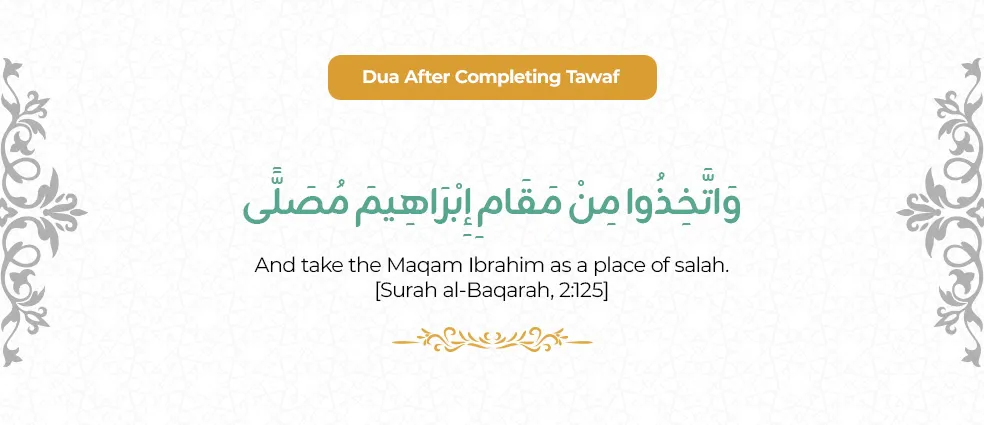
Pilgrims say duas and two rak'ahs to imitate in Umrah after Tawaf around Maqam Ibrahim. Asking Allah for acceptance, forgiveness, and blessings right now offers a fantastic opportunity. Otherwise, you may pray wherever you are in Masjid al-Haram. Legend holds that in the first rakah you ought to read Surah Kafirun; in the two rak'ahs Surah Ikhlas. Now, you do your duas. This will give you a great chance to forgive and accept all your Umrah deeds, given the strong bond that forms between Tawaf and your heart.
Upon reaching the hill of Safa, face the direction of the Kaaba and raise your hands in supplication. Don't raise your hands to your earlobes or gesture towards the Kaaba as you would have done during Tawaf. You may say Takbir (Allāhu akbar), Tahlil (lā ilāha illa Llāh), and send Salawat upon the Prophet ﷺ.
It is Sunnah to recite the following du'a:
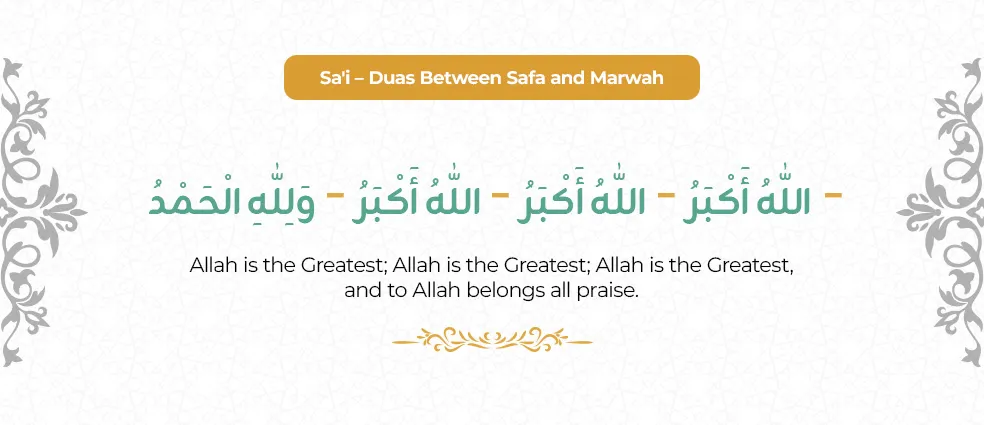
اللّٰهُ أَكْبَرُ ❁ اللّٰهُ أَكْبَرُ ❁ اللّٰهُ أَكْبَرُ ❁ وَلِلّٰهِ الْحَمْدُ ❁
Allāhu akbar, Allāhu akbar, Allāhu akbar, wa li Llāhi l-ḥamd.
Allah is the Greatest; Allah is the Greatest; Allah is the Greatest, and to Allah belongs all praise.
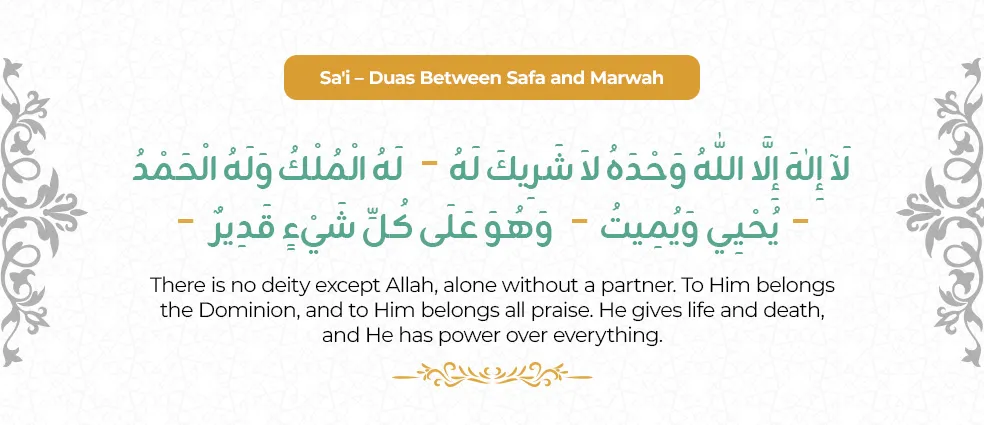
لَآ إِلٰهَ إِلَّا اللّٰهُ وَحْدَهُ لاَ شَرِيكَ لَهُ ❁ لَهُ الْمُلْكُ وَلَهُ الْحَمْدُ ❁ يُحْيِي وَيُمِيتُ ❁ وَهُوَ عَلَى كُلِّ شَيْءٍ قَدِيرٌ ❁
La ilāha illa Llāhu waḥdahu la sharīka lah, lahu l-mulku wa lahu l-ḥamd, yuḥīī wa yumīt, wa huwa ʿalā kulli shay’in qadīr.
There is no deity except Allah, alone without a partner. To Him belongs the Dominion, and to Him belongs all praise. He gives life and death, and He has power over everything.
لَآ إِلٰهَ إِلَّا اللّٰهُ وَحْدَهُ ❁ اَنْجَزَ وَعْدَهُ وَنَصَرَ عَبْدَهُ وَهَزَمَ اَلْأَحْزَابَ وَحْدَهُ ❁
La ilāha illa Llāhu waḥdah, anjaza waʿdahu wa naṣara ʿabdahu wa hazama l-aḥzāba waḥdah.
There is no deity except Allah alone. He fulfilled His promise, supported His slave, and defeated the Confederates alone.
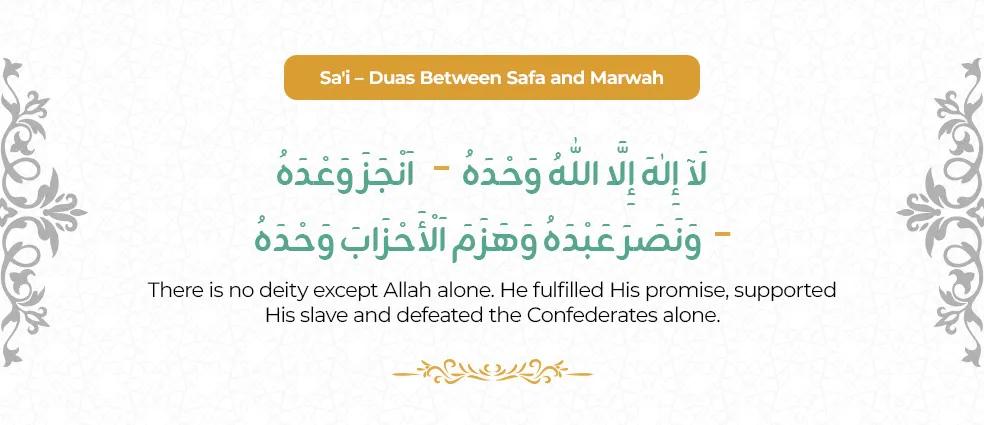
After reciting this du'a, you may recite your own supplications. Read the du'a a total of three times, making your own supplications in between each time, as was the Sunnah of the Prophet ﷺ. Sa'i follows the completion of the seventh circle between the two hills of Safa and Marwah in memory of Hazrat Hajar's (AS) perseverance and dedication. There is no set dua to recite during Sa'i in Umrah. Still, you can use personal duas for family, health, and direction.
Finally, after completing Sa'i, there is finishing Umrah Rituals through "Halq" – shaving of the complete head – and "Taqsir" – cutting it short. Pilgrims should make duas to recite during Umrah, thanking Allah and seeking steadfastness. This symbolises humility, the beginning of a new life, and their subservience to Allah. Finally, after receiving the shaving of their head, it becomes completely obligatory that the Muslim has to show their gratitude to Allah for accepting their Umrah and pray for its acceptance. "Dua performed by the Prophet ﷺ" gained popularity during the shaving of heads.
After completing, although they are now done performing the Umrah, the doors of duaa are always Open. Even after Umrah, the duas to be recited during Umrah should continue. This is a blessed time to ask for forgiveness, patience, and guidance. Many scholars emphasise the continued recitation of Umrah duas in Arabic even after returning home. The act of making duaa after the Umrah is a very pious deed because the person who is making the duaa is someone who just done an act of worship and is considered sacred. Start making duaa to Allah for His forgiveness, for the patience of this Ummah in their religion, and for getting the chance to implement His commandments. It is recommended that you continue making duaa once you get back home.
Allah answers every dua, though not always in the way we expect. Acceptance depends on sincerity, patience, halal earnings, and trust in Allah. These principles guide pilgrims following the Umrah steps and duas. Allah responds to every dua, but not always in the way we expect. Allah responds to all du'as. Not as per our expectation. Not as per our desires. Allah may give us the result of our duas instantly. Allah keeps us waiting for some time and gives us something better.
During Umrah, modest but powerful requests fit best. These include Istighfar (asking forgiveness), dua for direction and unshakeable faith, sending Salawat upon the Prophet ﷺ, dua for Jannah, and protection from Hellfire. On the holy trip, these duas purify the heart and harmonise with the fundamental ideas of Islam.
The most effective duas to make in Umrah include:
These align with the purpose of what duas to read during Umrah.
It is encouraged to make a dua for someone going for Umrah, as they will be visiting sacred places where supplications are readily accepted. Along with making heartfelt prayers, many Muslims also send Umrah Mubarak wishes and Islamic messages for someone going for Umrah to express love, encouragement, and spiritual support before departure.
A beautiful and straightforward supplication to say is:
"May Allah accept your Umrah and grant you a safe return."
This strengthens bonds of faith and allows loved ones to share in the spiritual blessings of the journey.
Avoid rushing your personal duas for Umrah. Take your time, remain focused, and speak to Allah with sincerity. Make personal duas often, as Allah loves to hear from His servants. Trust His wisdom fully and remain hopeful, knowing that He is the Most Merciful and Most Generous.
Umrah dua may consist of varied demands for us as well as others. You can ask Allah for purification, forgiveness, grounding in Islam, as well as for all the benefits on earth. You can also ask your relatives and the broader Ummah. These duas are by individuals and are basically about good children, the acquisition of skills through education, marriage, and a job, and freedom from all troubles. Because this is a time of reflection, as well as empathy, it becomes an obligation upon you to perform your duas in a way that would lead to your moral uplift and would remind you of the reasons behind all worship.
Umrah duas are supplications made to Allah during the different rituals of Umrah, such as Ihram, Tawaf, Sa'i, and after completing Umrah. These duas can be Quranic, Sunnah-based, or completely personal. There is no restriction on language or wording.
There are no compulsory or fixed duas for most parts of Umrah. Apart from the Talbiyah and some recommended supplications, pilgrims are free to make any dua they wish. This flexibility makes Umrah a deeply personal act of worship.
You can make duas for:
Personal duas are highly encouraged during Umrah.
The intention for Umrah can be made in the heart or verbally. A commonly recited phrase is:
"Labbayk Allahumma Umrah"
Meaning: "O Allah, here I am to perform Umrah."
The Talbiyah is the core dua of Umrah and is recited after making the intention:
"Labbayk Allahumma labbayk…"
It should be recited frequently until reaching Masjid al-Haram.
There is no specific fixed dua to recite upon seeing the Kaaba. This is a highly accepted time for making personal, heartfelt supplications for anything permissible.
No, there are no authentic fixed duas for each of the seven Tawaf rounds. Pilgrims may recite the Quran, make personal duas, perform dhikr, or send blessings upon the Prophet ﷺ throughout Tawaf.
A well-known Sunnah dua recited between Rukn Yamani and Hajj-e-Aswad is:
"Rabbana atina fid-dunya hasanah…"
This dua is recommended but not obligatory.
Yes. Duas can be made in any language, including English, Urdu, Bangla, or your native language. Allah understands all languages, and sincerity matters more than eloquence.
There are no fixed duas during Sa'i. Pilgrims are encouraged to praise Allah, make personal duas, and ask for guidance while walking between Safa and Marwah.
After completing Umrah, you should ask Allah for:
Duas after Umrah are highly virtuous and should continue even after returning home.
Yes, Umrah is a time of high acceptance of du'a, especially in the Haram. Acceptance depends on sincerity, halal income, patience, and trust in Allah's wisdom.
Yes, it is permissible and encouraged. You may request them to remember you in their duas, especially while in the Haram or during Tawaf.
Using dua books, cards, or mobile apps is allowed and helpful for focus, especially for beginners. However, they are not required, and memorisation is not necessary.
Yes. The impact of Umrah continues beyond the journey. Continue making dua for acceptance, forgiveness, and a transformed life after returning home.
Some highly recommended moments include:
 SVG.svg)
Makkah Travel is here to help you visit religious places.

 Arrow SVG.svg)
 SVG.svg)